
Last updated November 24, 2026
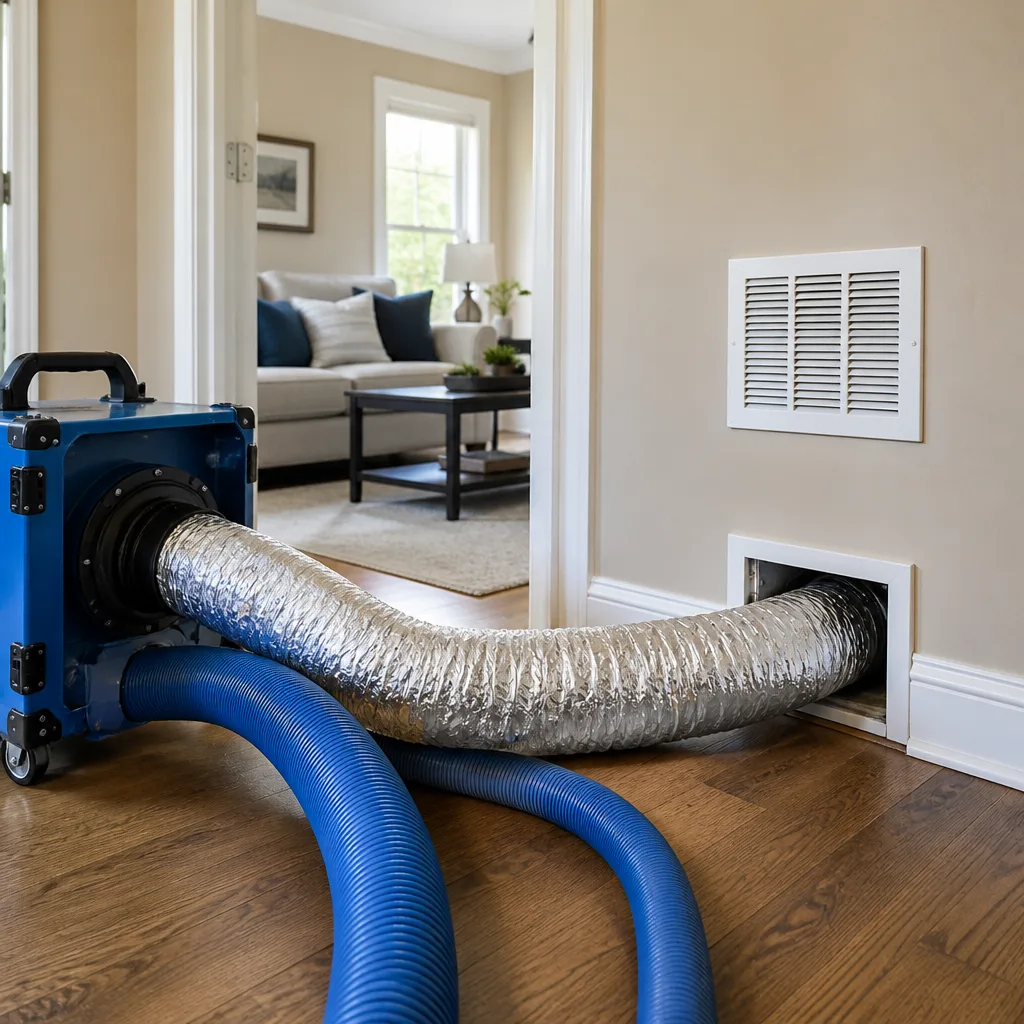 Whole-home duct cleaning
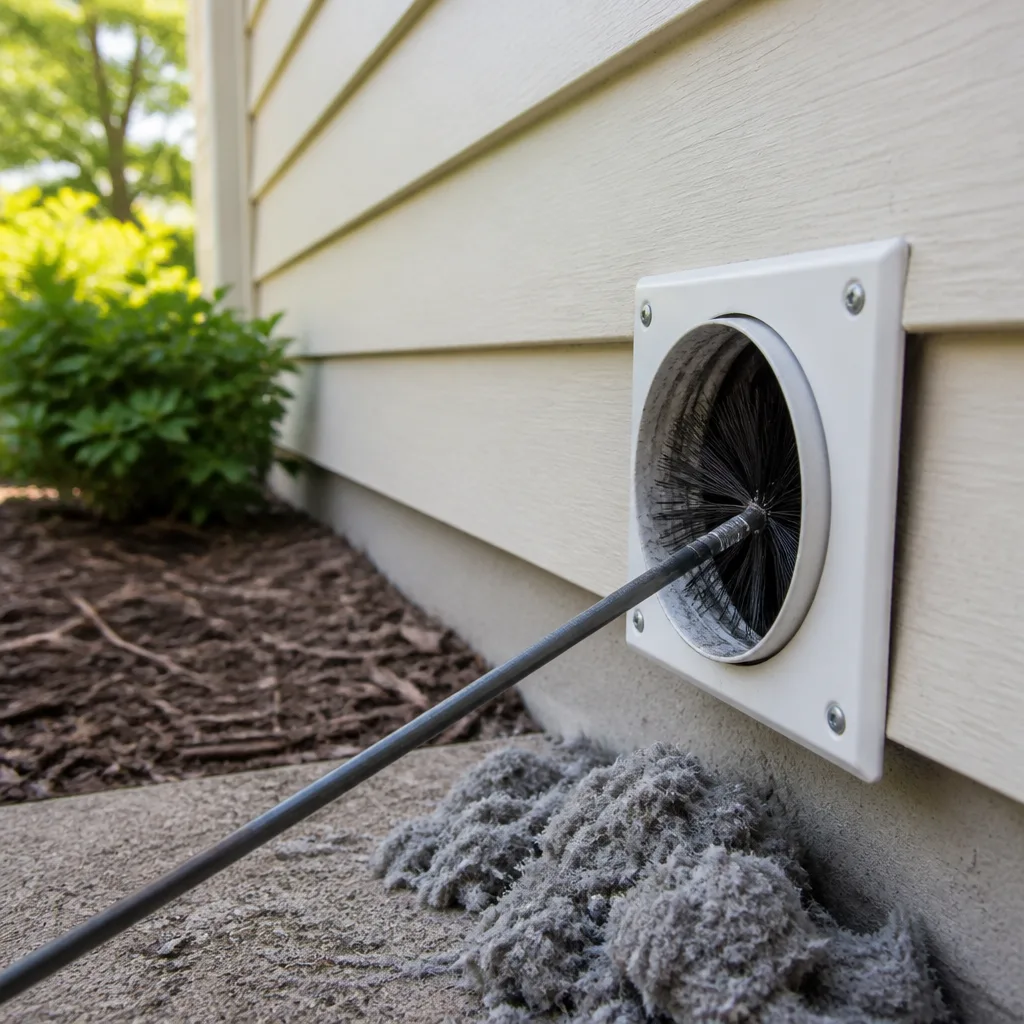 Dryer vent cleaning
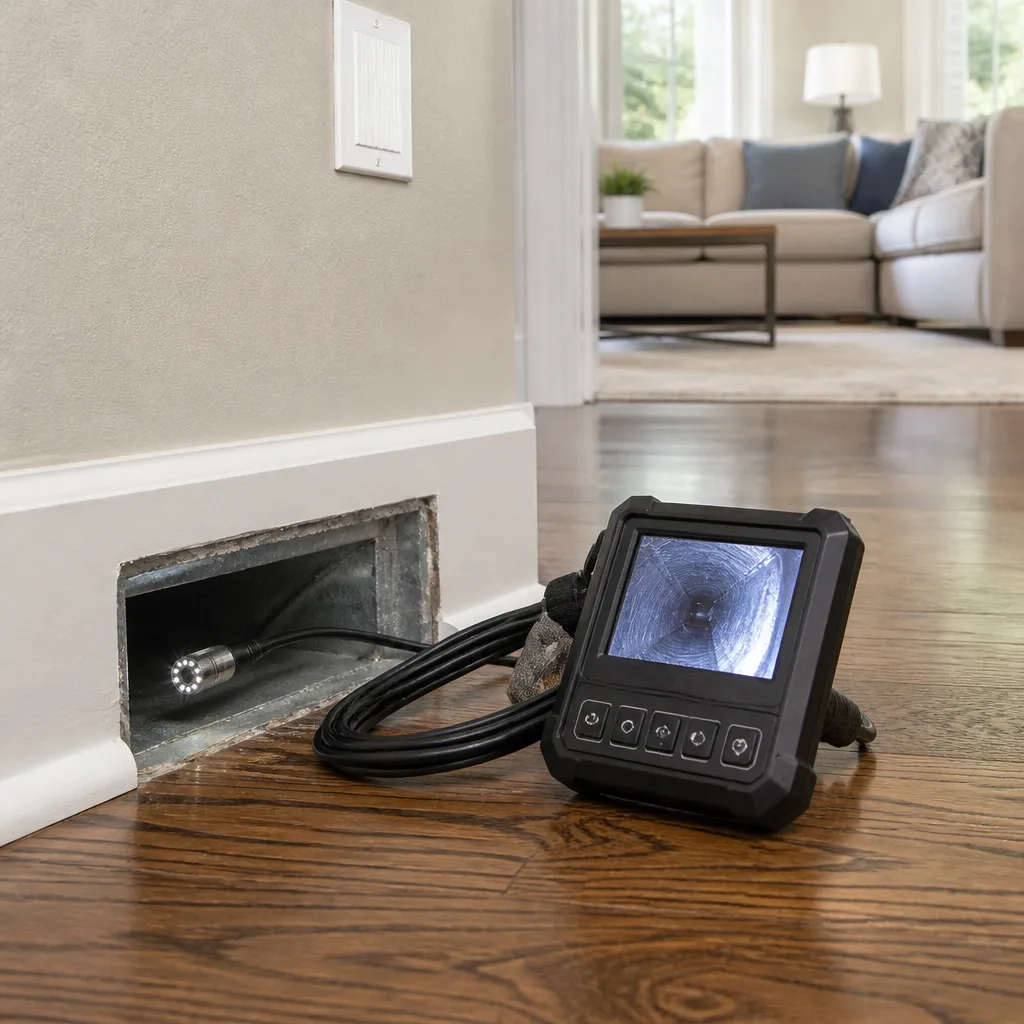 Camera inspection
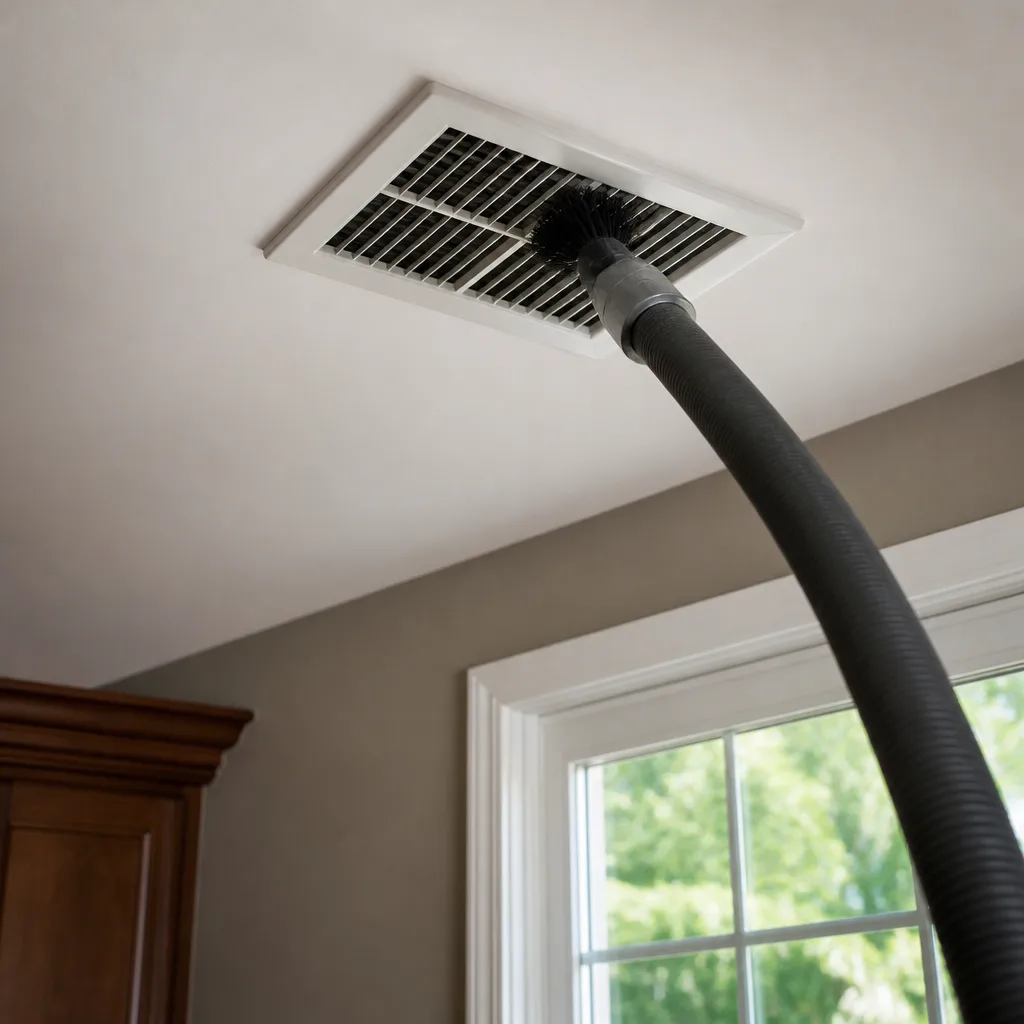 Sanitizing & deodorizing
Whole-system duct and dryer vent check with before-and-after photos - you see exactly what came out of your vents
That "$99 whole-house special" is a bait ad - the real number appears once they are in your hallway, or the "clean" is a shop-vac at the register. We photograph the inside of your ducts before and after instead.
Air Duct Cleaning Permits, Codes & Inspections in Garden Grove, CA: What You Need to Know
Cleaning your ducts doesn’t require a permit. That’s the part most Garden Grove homeowners already know. The part that surprises them is what happens next: a technician finishes the cleaning, then recommends sealing the ducts, swapping a collapsed section, or cutting in an access panel. Nothing wrong with any of that work. But if nobody on the crew mentions a permit, you need to slow the conversation down. In Garden Grove, the line between “cleaning” and “modifying” a mechanical system is where California code jurisdiction begins, and crossing it quietly can leave a paper trail that follows your house all the way to the closing table. This guide walks through where that line sits, what California’s Mechanical Code and Title 24 have to say about it, and the exact questions to ask before any scope creeps past cleaning.
Quick Answer
Routine air duct cleaning in Garden Grove does not require a building permit. Duct sealing, section replacement, adding access panels, or altering the connection at the air handler can fall under California Mechanical Code Chapter 6 and Title 24 energy compliance rules, which means a permit may be required depending on the scope. Any contractor performing that work must hold a valid C-20 Warm-Air Heating, Ventilating and Air-Conditioning license from the California State License Board. Cleaning alone doesn’t.
Styles & brands we work with
- Whole-home duct cleaning
- Dryer vent cleaning
- Camera inspection
- Sanitizing & deodorizing
Table of Contents
- Cleaning vs. Modification: Where Garden Grove Draws the Line
- What California Mechanical Code Chapter 6 Actually Covers
- When Duct Sealing Crosses Into Permit Territory in Orange County
- Title 24 Energy Compliance and Your Ductwork
- How Unpermitted Duct Work Surfaces During a Home Sale
- Questions to Ask Before Scope Expands Beyond Cleaning
- How to Verify a C-20 License With the CSLB
- What a Garden Grove Duct Inspection Involves
Cleaning vs. Modification: Where Garden Grove Draws the Line
The clearest way to think about duct permits in Garden Grove is to separate the two things a contractor might do in your home: clean the system, or change the system. Cleaning removes accumulation. Modification changes geometry, materials, or connections. Those are different legal categories in California, and only one of them routinely requires a permit.
Here’s the division in practical terms. Cleaning-only work typically includes:
- Vacuuming and brushing the interior of supply and return ducts
- Agitating dust and debris with rotary equipment like a Rotobrush or Nikro system
- Cleaning the air handler cabinet, blower, and evaporator coil surfaces (without disconnecting refrigerant lines)
- Sanitizing duct interiors with a fogging application
- Cleaning the dryer vent run from the dryer connection to the exterior termination
None of those steps alter the mechanical system. A permit isn’t part of the conversation, and any contractor who tries to sell you one for cleaning alone is either confused or padding the invoice.
Modification work is a different story. That category almost always includes:
- Adding a new access panel where none existed
- Cutting out and replacing a section of rigid or flex duct
- Re-sealing joints, seams, or boots in a way that changes the system’s rated leakage
- Moving or resizing a duct run
- Changing the connection between the ductwork and the air handler cabinet
If a Garden Grove crew recommends any of those during a cleaning visit, the next question out of your mouth should be: “Does this require a permit?” A contractor who knows Orange County jurisdiction will have a straight answer, and will pull the permit before touching a saw. When we walk a customer through the scope after cleaning, we write down exactly what was cleaned, what was found, and what – if anything – needs modification. That written record matters later. So does the permit.
What California Mechanical Code Chapter 6 Actually Covers
California Mechanical Code Chapter 6 addresses duct systems directly: duct construction, installation, and the requirements for how ductwork is sized, supported, sealed, and connected. When a permit is pulled for duct work in Garden Grove, Chapter 6 is one of the documents the local building department will use to review the scope. The California Energy Code (Title 24, Part 6) sits alongside it and applies specifically to duct insulation, duct sealing, and the leakage limits on any duct system that moves conditioned air.
A few practical facts worth knowing:
- Duct cleaning is not a Chapter 6 activity. Cleaning doesn’t construct, install, or alter anything – it removes what’s already inside.
- Duct repair and replacement fall under Chapter 6. Section replacement, joint sealing that changes the rated system, and new access panels are construction work and typically require a permit through your local building department.
- Title 24 leakage requirements apply to sealed systems. If a contractor seals your ducts and claims a specific leakage reduction, that claim comes with compliance documentation expectations under the energy code.
- Access panel installation is both a code question and a working question. A panel that gets cut in and never sealed back correctly becomes a leak, and a leak is exactly what duct cleaning is meant to prevent.
Garden Grove building permit review is handled by the city’s Community Development Department, and the inspector who signs off on a duct modification permit is looking at installation methods – support spacing, sealant type, insulation rating, connection integrity – all governed by the adopted edition of the CMC in force at the time. If a contractor tells you “it’s just a duct, no permit needed,” ask them to point to the Chapter 6 language in your scope. Clean duct cleaning crews say “cleaning doesn’t need a permit.” Comfortable contractors say “modification might, let me check the scope.”
When Duct Sealing Crosses Into Permit Territory in Orange County
Duct sealing is the ambiguous middle ground, and it’s where most of the confusion happens in Orange County. The answer depends on what’s actually being sealed and how.
Here’s how to think about it:
Not typically a permit. Re-taping a loose joint, re-mastic around a boot at the floor register, or sealing a small gap visible from inside the duct – these are maintenance-level fixes that fall within a cleaning crew’s normal scope. They don’t change the system’s geometry or rated leakage.
Often a permit. Any full-system duct sealing application where the contractor is expected to document leakage reduction under Title 24 – the kind of work a professional sealing contractor performs with measured before-and-after leakage tests – usually requires a permit because the work is being certified as an energy-code compliance measure. The building department reviewing that compliance document will also review the permit.
Almost always a permit. Sealing that involves closing off or rerouting supply or return branches, installing any new rigid ducting, or adding structural support falls squarely under Chapter 6 and needs to be permitted before the saw comes out.
What this means for a Garden Grove homeowner hearing a sealing pitch: ask what type of sealing is being proposed. “We’ll re-mastic the visible joints while we’re cleaning” is a legitimate cleaning-add-on. “We’ll seal the entire system and bring you a leakage report” is a code compliance job and needs a permit. Those are different projects at different prices, and only one is likely to appear on your permit history.
The other thing to know is that sealing done wrong is worse than no sealing at all. A bead of sealant across a joint that was already loose hides the problem. Duct repair and sealing work should be inspected before it’s buried behind drywall or insulation. If a sealing project is proposed to you in Garden Grove, the scope should be written down, the permit should reflect it (if applicable), and the inspection should happen before the last panel goes back on.
Title 24 Energy Compliance and Your Ductwork
Title 24, Part 6 is California’s energy code, and it applies to ductwork any time ductwork is replaced, substantially altered, or its sealed performance is claimed. For a Garden Grove homeowner, the practical consequences are threefold.
- Duct replacement triggers compliance. New ductwork must meet R-value requirements for the ducts’ location (attic, crawlspace, wall cavity – each has its own standard).
- Leakage performance may be documented. If your scope includes duct sealing with a leakage claim, expect to receive documentation of the before-and-after leakage percentage. This is not busywork – it’s the compliance record for the job.
- Permitted work creates a paper trail. A Title 24 compliance document is filed with the permit, inspected, and becomes part of your home’s official record. That record does a lot of quiet work for you if you ever sell.
We’ve seen customers caught between a low-bid contractor who wants to skip the permit (“the inspector won’t even look at it”) and a reasonable expectation that the work they paid for will still be standing when they sell the house. The gap between those two expectations is a permit. Cleaning a system and upgrading a system are both fine, but only the upgrade needs compliance documentation, and skipping it doesn’t save the homeowner money in the end. It just transfers the paperwork problem to the next person in line.
If you’re hearing a large sealing pitch in Garden Grove and the contractor hasn’t mentioned Title 24 or leakage documentation, ask them how their sealed result gets verified. The answer tells you whether they’re certified specialists or opportunists.
How Unpermitted Duct Work Surfaces During a Home Sale
A permit question that feels abstract during a service call gets very concrete during a home sale. When a Garden Grove home goes on the market, the buyer’s agent typically pulls the city’s permit history and tax records for the address. If the visible mechanical system looks newer than the last permit on file, the question gets asked: when was this ductwork done, and who did it?
California Civil Code Section 1102 requires a seller to disclose known material facts about the property on the Transfer Disclosure Statement, including any alterations made without the required permits. This is the part of the transaction where unpermitted duct modification becomes expensive. Not because the work is necessarily dangerous – usually it isn’t – but because the disclosure creates negotiating leverage, and the buyer’s lender and inspector will want proof the modification is documented and meets code.
What typically happens:
- Buyer’s home inspector flags new-looking ductwork. If it’s not on the permit record and the seller can’t produce documentation, the buyer asks for time to verify.
- Escrow gets extended while a permit is retroactively pulled. That process involves an inspection, possible corrections, and additional cost – often more than pulling the permit up front would have cost.
- The seller has to disclose what they know. Civil Code 1102 doesn’t care whether the seller personally did the work or inherited it from a prior owner. Known unpermitted alteration is a required disclosure.
For a Garden Grove homeowner planning to sell in the next several years, the takeaway is simple. Any repair or duct modification performed on your system should either come with a permit or be small enough to fall clearly outside the modification category. A trusted contractor will tell you which side of that line a given project falls on, in writing, before the work starts. We keep a written summary of every visit – what was cleaned, what was found, and what was recommended – so a homeowner has a documented record years later when a buyer’s agent comes asking.
If you’ve just bought a Garden Grove home and the home inspector flagged ductwork as newer than the permit history, don’t panic. Pull the address on the city’s permit portal and find out what’s been documented. Then call us, and we’ll help you sort what’s cleaning-related from what’s construction-related.
Questions to Ask Before Scope Expands Beyond Cleaning
Most bait-and-switch problems in this industry start with a scope change during a visit. A contractor who came to clean suddenly has a duct sealing or replacement pitch on the table. Sometimes the pitch is legitimate – we’ve seen genuinely leaking systems in older Garden Grove homes where the sealing recommendation was correct. Often it’s a sales upsell. Either way, the homeowner needs to slow down and ask four questions before agreeing.
- “Which part of the work is cleaning and which part is modification?” Ask for a written scope that separates the two. A legitimate contractor can answer in one sentence. A sales pitch won’t.
- “Does the modification work require a permit in Garden Grove?” If the answer is “yes,” the next question is whether they’ll pull it, and what the permit number will be before work starts. If the answer is “no,” ask them to show you why in the written scope – not verbally.
- “Are you licensed to do this work?” Cleaning is often handled by technicians under a general contractor or specialty license. Structural duct modification is a C-20 scope. Ask to see the license number and confirm it against the CSLB record.
- “Will the permit be inspected before the work is closed up?” Any duct sealing or replacement project that’s going to be insulated or concealed should be inspected first. A contractor who wants to finish first and “let the inspector look later” is one you should walk away from.
Ask those four things before any scope change gets approved. A contractor performing air duct cleaning as a standalone service won’t need to answer questions two through four – those only come up if the project crosses into construction. But you should ask them once, in writing, so there’s a clear line in the paperwork about what was and wasn’t modified. It’s the single best protection a Garden Grove homeowner has against an unexpected permit problem two years from now.
One more question worth adding to the list, especially for older Garden Grove homes built before the last Title 24 update: “What’s the current condition of my duct insulation?” Cleaning a system whose insulation is falling off inside the duct isn’t fixing anything – cleaning surfaces debris that the failing insulation will just re-shed. That condition turns a cleaning visit into a repair conversation, and it’s the conversation where permits actually enter the picture honestly. Better to hear it before the cleaning crew touches the system than in a post-cleaning report.
How to Verify a C-20 License With the CSLB
For any duct work beyond cleaning in Garden Grove, the contractor performing it should hold a C-20 Warm-Air Heating, Ventilating and Air-Conditioning license from the California State License Board. The C-20 classification covers installation, alteration, and repair of warm-air heating and ventilating systems, which is the scope most duct modification work sits inside. Cleaning crews don’t automatically need a C-20 – but the moment a proposed project crosses into modification, they do.
Verification is straightforward, and free:
- Go to the CSLB’s online license lookup (cslb.ca.gov).
- Enter the contractor’s license number, or search by the business name and city.
- Confirm the license status is “Active” and the classification includes C-20.
- Check the expiration date – an active license should not be within days of expiring when work starts.
- Confirm the license is issued to the business entity on your contract, not a different company name.
The last step catches more problems than the others combined. A contractor who holds a valid C-20 under a different business entity, or whose license shows up under a related name, is worth a question before signing. So is a contractor whose license is “expired” or “suspended” – the CSLB record is the definitive answer, not the business card.
For cleaning-only work, the license question matters in a different way. Cleaning technicians work under the responsible contractor, and the contracting business itself should be licensed and insured according to California rules. When we connect you with a local pro for duct cleaning in Garden Grove, that pro is licensed and insured as their state requires, and we’ll tell you which license classification covers the work being proposed. If the scope stays pure cleaning, no C-20 is required. If it moves into modification, we’ll show you the C-20 before you sign.
Same goes for any adjacent work. If a cleaning visit turns into a proposal for HVAC cleaning that includes coil work or blower servicing, ask the same set of questions about what’s cleaning and what’s mechanical. The line between the two is not always obvious, and the honest contractor will draw it for you.
What a Garden Grove Duct Inspection Involves
When a duct modification permit is pulled, the inspection that follows is not a mystery. The inspector arrives, walks the scope, and confirms the work matches the permit and the code. Homeowners can prepare by knowing what’s being checked.
At a high level, an inspection typically includes:
- Verification of the scope. Duct runs that appear on the permit should be the runs actually installed, sealed, or added.
- Visual check of connections and supports. Duct installation must meet support spacing and attachment methods per the adopted mechanical code.
- Sealing and insulation review. Joints and seams should be sealed with approved materials; insulation should meet Title 24 requirements for the location.
- Access panel review. Any new access panel should be installed per code and properly sealed after installation.
- Confirmation of any leakage testing documentation. If the project included a leakage performance requirement, that documentation is part of the record.
Two things often get missed during a first inspection: sealant applied over ductwork that wasn’t cleaned first (sealant doesn’t stick to debris), and duct support methods that don’t match the code the permit was pulled under. Both get flagged, both require a return visit, and both cost more time than doing the work right the first time.
For cleaning-only work – the everyday visit where you’re getting dust out of your ducts and your dryer vent cleaned out – there’s no inspection because there’s no permit. That said, a professional crew should still leave you with a written record of what was cleaned and any conditions worth knowing about. We use Rotobrush and Nikro equipment for the cleaning phase, and when we find a condition inside the duct that warrants a repair conversation, we tell you in writing so you can make the permit decision on your own timeline. That’s not a sales report – it’s the kind of record that keeps you out of trouble during a home inspection five years from now. If you’ve had a sudden spike in dust after a renovation or you’re seeing debris around the registers, that’s a good time to call us and let a technician walk the scope before anything gets sealed up.
Common Mistakes to Avoid
- Accepting a sealing pitch without asking about permits. A contractor who seals your ductwork and claims it’s “just cleaning work” may be lumping a permit-needed modification into the cleaning invoice. Always ask which category the work falls in.
- Assuming duct cleaning requires a permit. It doesn’t, and paying for one is a sign you’re talking to the wrong contractor or one who doesn’t understand Garden Grove jurisdiction well.
- Skipping the CSLB lookup before signing anything beyond cleaning. A contractor whose license doesn’t actually cover the modification scope is a problem that surfaces later, when the buyer’s inspector asks for documentation.
- Letting sealant go on before the ducts are cleaned. Sealant applied over accumulated debris doesn’t stick, and the correction is a return visit. Order of operations matters as much as the material.
- Never getting a written scope before work begins. Verbal promises about what was cleaned or modified don’t survive escrow. A written scope does.
- Assuming the previous owner pulled a permit. If your Garden Grove home has ductwork newer than the last permit on file, that’s a question for the city’s permit portal and for Civil Code 1102 disclosure purposes.
- Treating a duct modification as a cleaning routine. New access panels, section replacement, and air handler connection changes are all construction work. They aren’t cleaned into existence – they’re installed and permitted.
See the difference
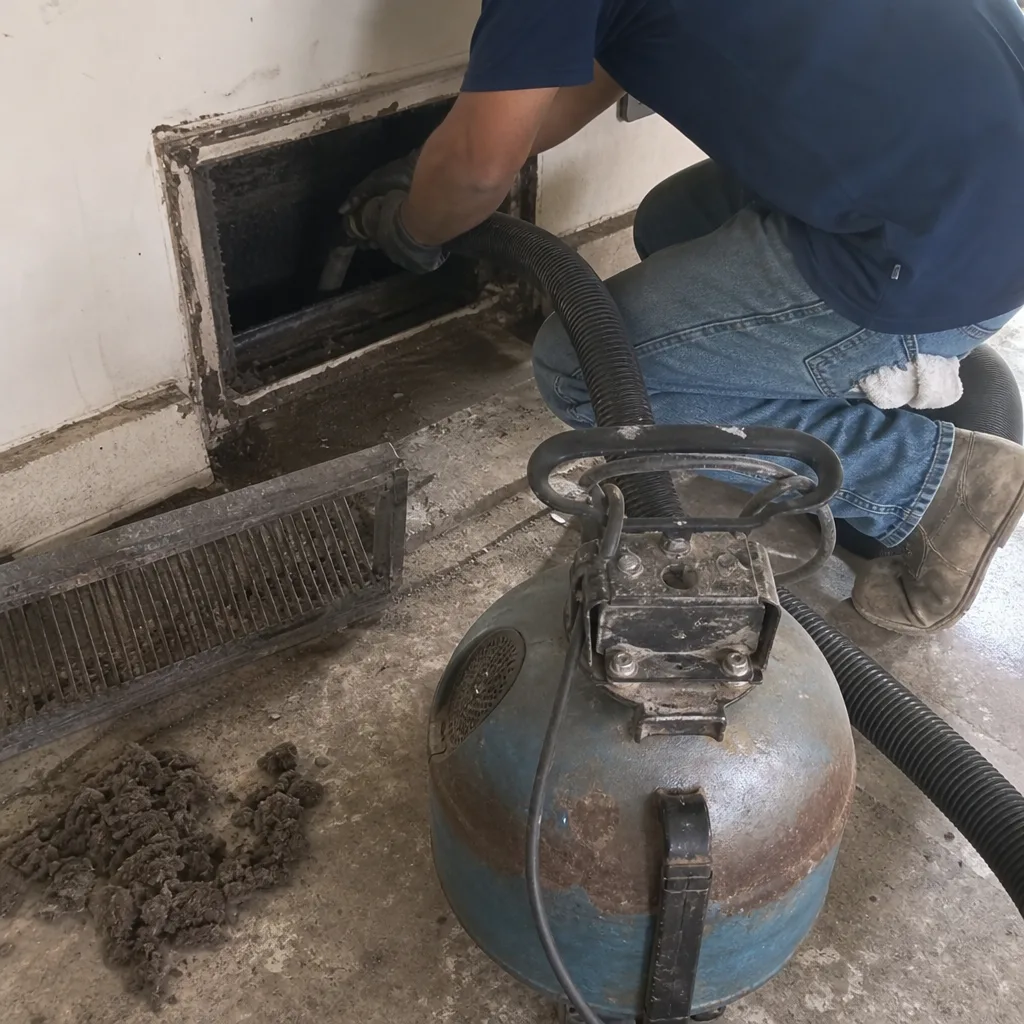 Before
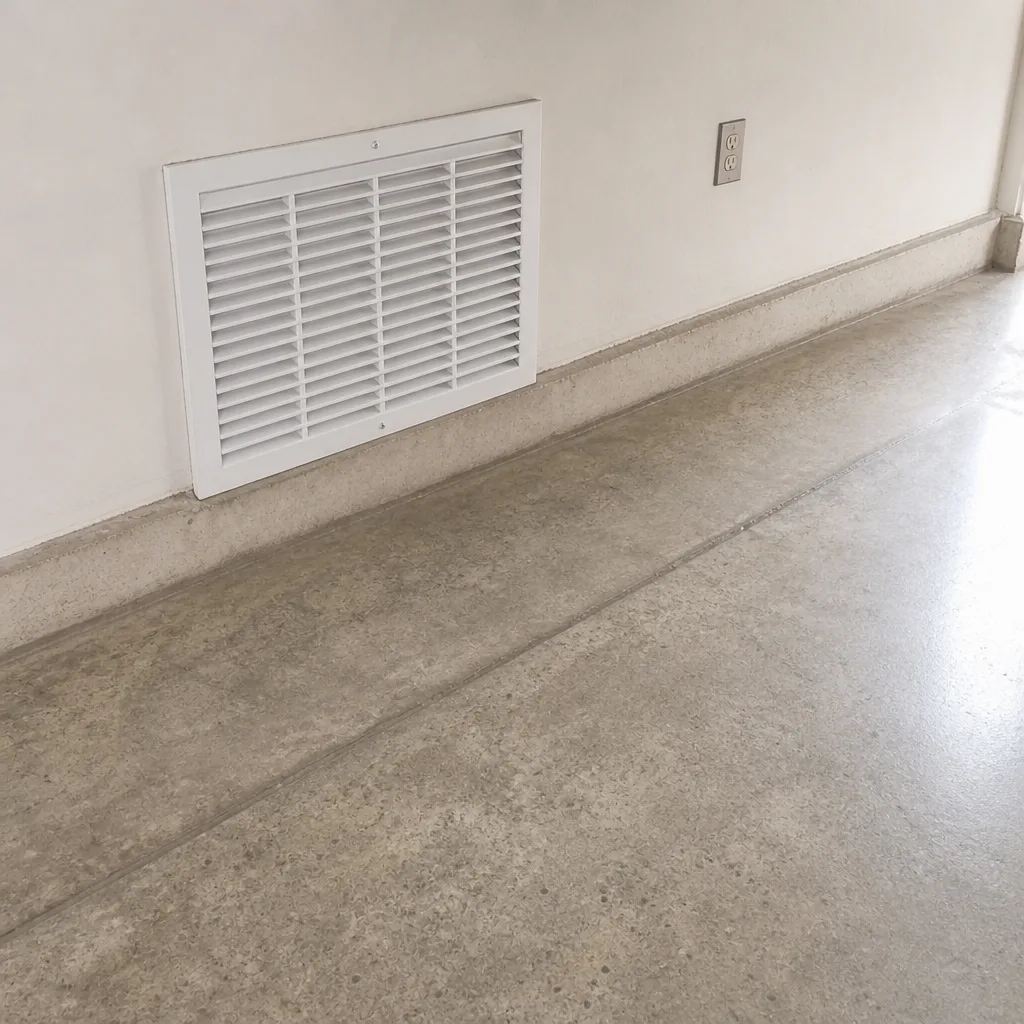 After
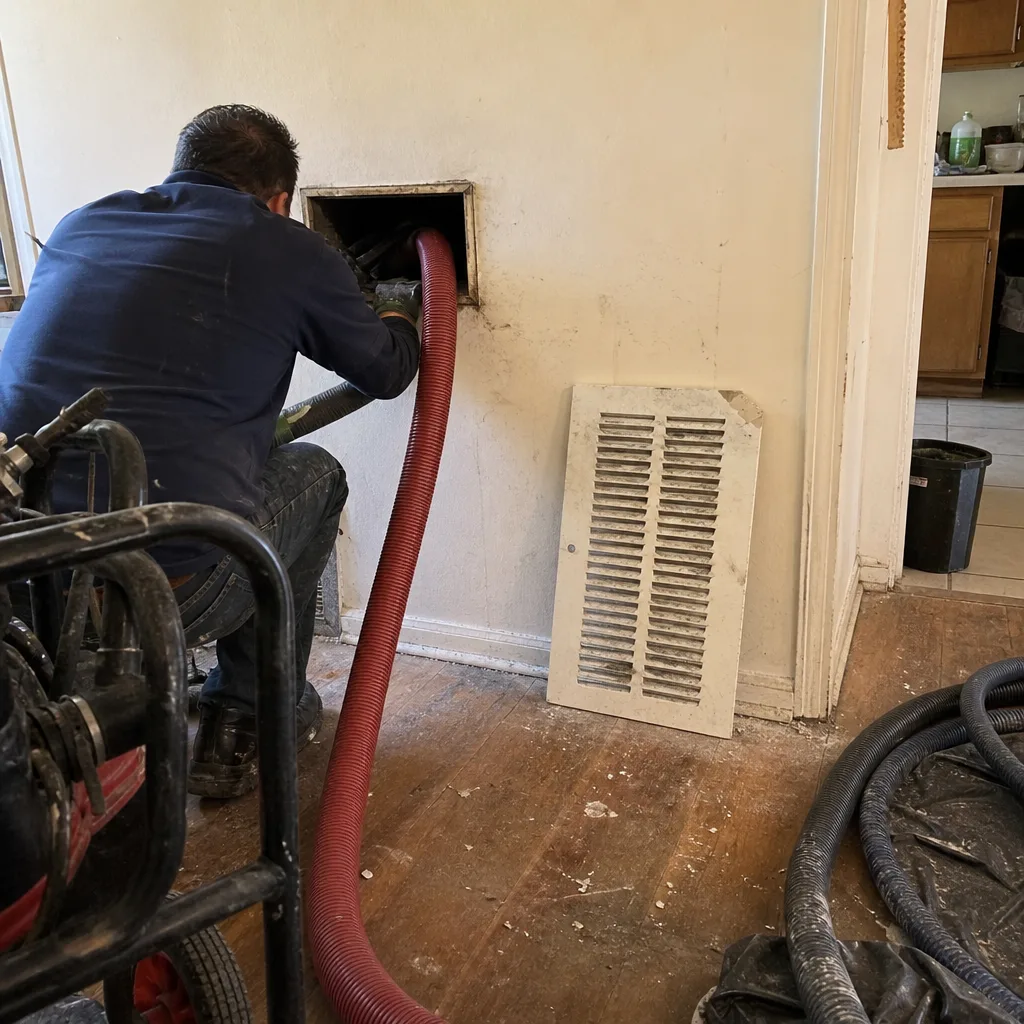 Before
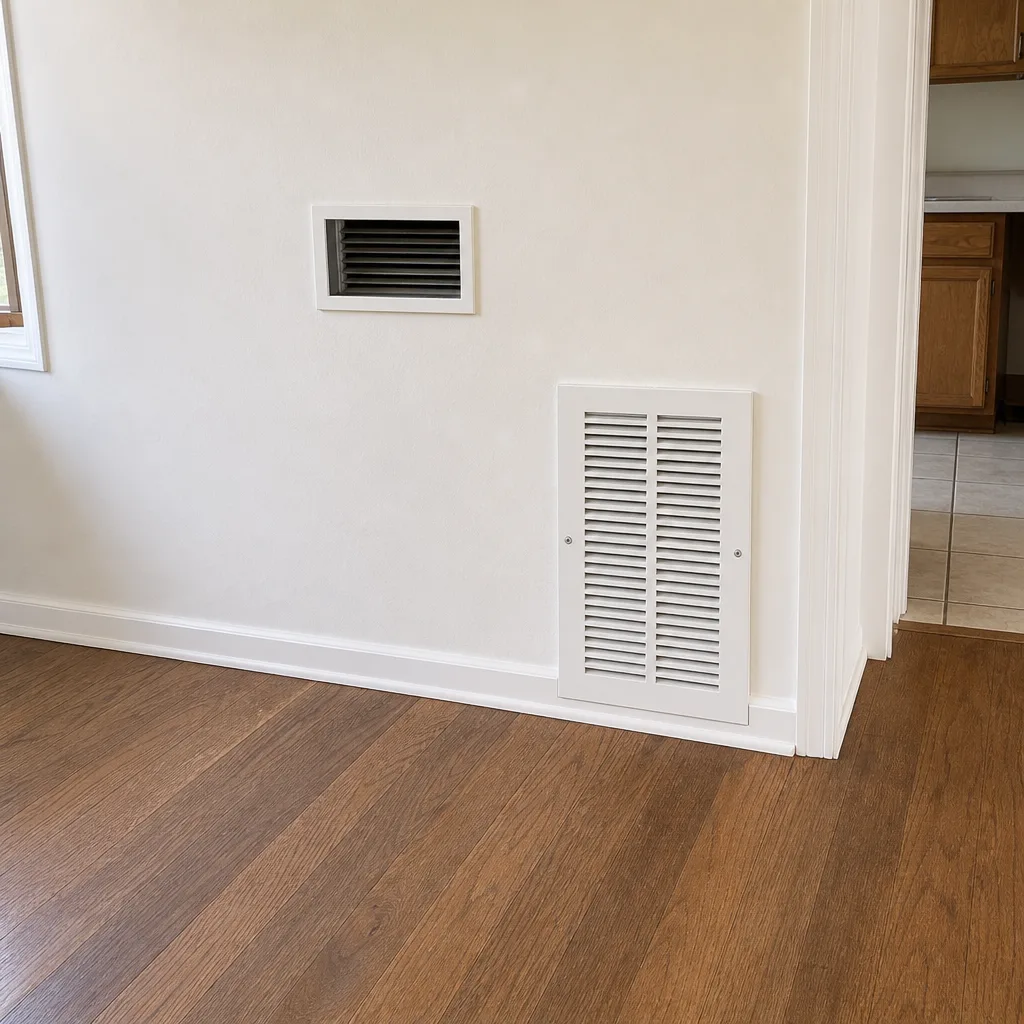 After
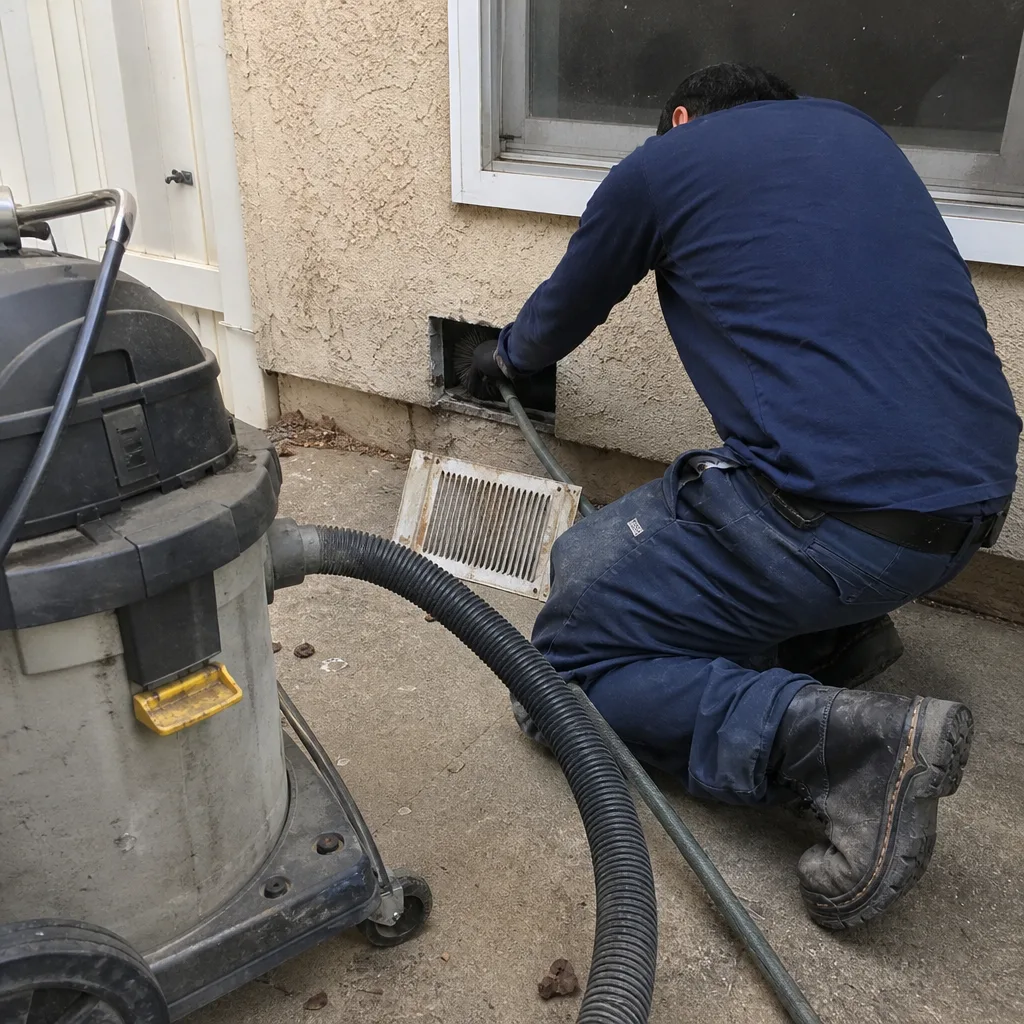 Before
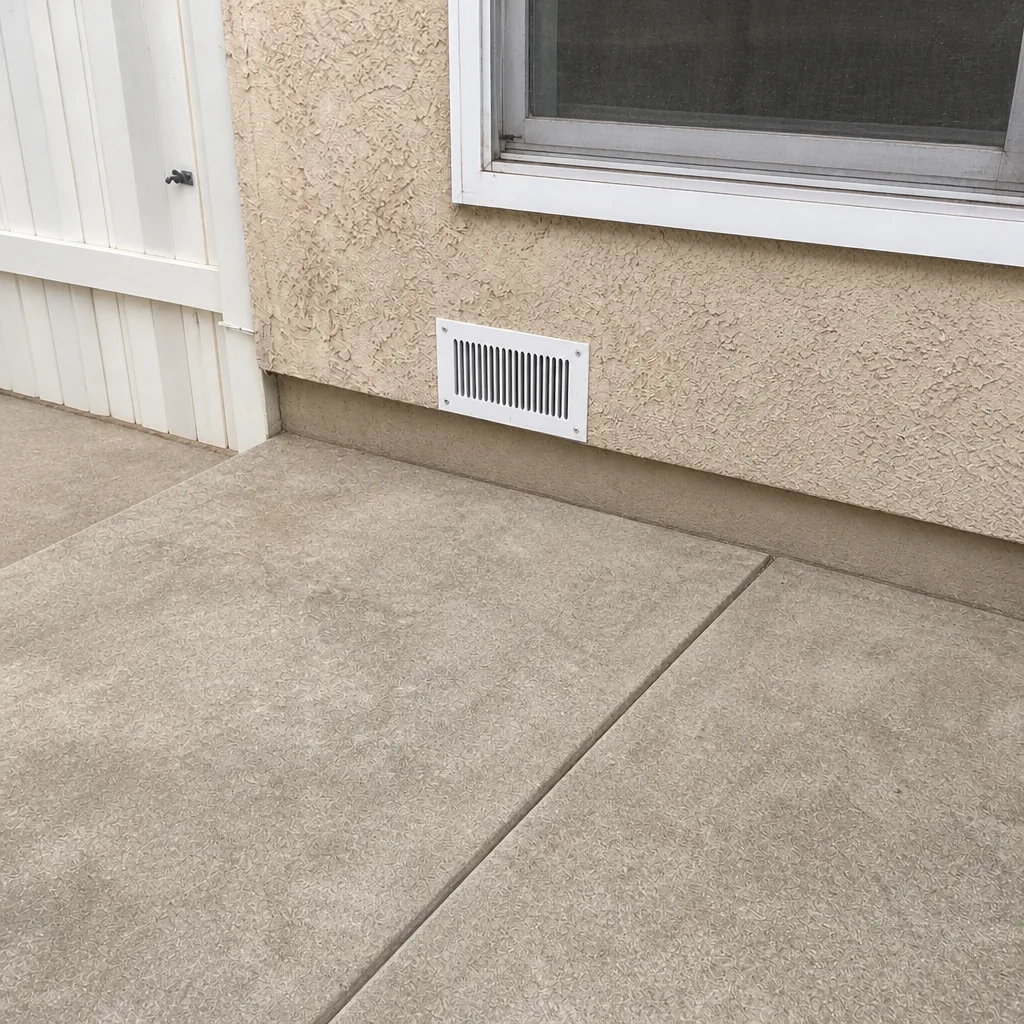 After
When to Call a Professional
Call a professional in Garden Grove when a cleaning visit surfaces a repair recommendation – especially one that involves sealing, section replacement, or a new access panel. That’s the moment permits enter the conversation, and the moment you want a crew that talks about scope honestly and weighs the permit question before pulling out a saw. Call when a home inspector has flagged ductwork as newer than the permit record, when you’re preparing to list and want the paperwork straight before a buyer asks, or when a contractor has proposed “whatever the cleaning crew finds, we’ll fix” without a written scope. If the cleaning itself is what you need – dust, debris, dryer vent accumulation, or post-renovation cleanup – that’s a standalone job that doesn’t touch the permit question. Garden Grove Air Duct Cleaning Pros offers free estimates in Garden Grove – call (833) 382-8410.
Frequently Asked Questions
No. Routine air duct cleaning doesn’t require a permit in Garden Grove, because cleaning removes accumulate debris without altering the mechanical system. The moment the work changes ducts – sealing joints, replacing a section, adding an access panel, or modifying where the duct connects to the air handler – a permit may be required under California Mechanical Code Chapter 6 and Title 24. If you’re only getting your ducts cleaned, no permit applies. Call (833) 382-8410 for an exact quote on the cleaning scope – estimates are free, and we’ll tell you in writing if the work crosses into modification.
Duct sealing typically requires a permit when it’s being documented as a Title 24 energy compliance measure – meaning the contractor certifies a leakage reduction through testing – or when it involves closing off, rerouting, or structurally altering supply or return branches. Re-mastic around a boot or re-taping a loose joint as part of a cleaning visit usually falls outside permit territory. A full-system sealing project that comes with a measured leakage report usually does. Call (833) 382-8410 to walk through your specific scope – estimates are free.
Unpermitted duct modifications surface during a home sale when the buyer’s inspector flags newer ductwork that doesn’t match the city permit record. California Civil Code Section 1102 requires a seller to disclose known material facts about the property, including alterations without required permits, on the Transfer Disclosure Statement. For a Garden Grove homeowner who inherited unpermitted work from a prior owner, the safest move is to pull the address on the city permit portal, review the record, and get ahead of the disclosure before listing. If the work is documentation-light but functionally fine, a written scope from a licensed C-20 contractor can help; if it’s not, a retroactive permit is the fix.
Go to the CSLB’s online license lookup at cslb.ca.gov, enter the contractor’s license number or search by business name and city, and confirm the license status is Active with a C-20 classification. Check the expiration date and confirm the license is issued to the business entity on your contract. Cleaning-only work doesn’t require a C-20, but any work that modifies ductwork does – and the CSLB record is the definitive answer, not the business card. Call (833) 382-8410 if you want to talk through what license classification covers the work you’ve been quoted.
Yes. Title 24, Part 6 applies to ductwork any time it’s replaced, substantially altered, or its sealed performance is documented. Duct replacement must meet R-value requirements for the ducts’ location, and if the scope includes a leakage claim, expect to receive before-and-after documentation. That paperwork gets filed with the permit, inspected, and becomes part of your home’s official record. It’s the verification layer that makes a sealing project defensible during a future home sale. Call (833) 382-8410 if you want help understanding what your proposed scope triggers.
No. Cleaning technicians work under the responsible contractor, and cleaning-only work doesn’t require a C-20. The moment repair work crosses into duct modification, sealing, section replacement, or air handler connection changes, that scope should be performed under a valid C-20 Warm-Air Heating, Ventilating and Air-Conditioning license. This is the single most important line a Garden Grove homeowner should ask about when a cleaning visit turns into a pitch. A trusted contractor will tell you which side of that line a given project falls on before the work starts, in writing.
The Bottom Line
Cleaning your ducts in Garden Grove doesn’t require a permit. Modifying them does. The homeowners who get tripped up aren’t the ones who skipped the permit knowingly – they’re the ones who were never told the scope had changed from cleaning to construction. Keep these four points in mind. First, any work that involves sealing, section replacement, or access panel installation should be scoped in writing, and if a permit is needed, pulled before the saw comes out. Second, C-20 license verification through the CSLB is free and takes five minutes – it’s the single best defense against unpermitted work. Third, Title 24 compliance documentation on sealed ducts becomes part of your home’s official record and protects you during a future sale. Fourth, disclose known unpermitted work under Civil Code 1102 – it will surface anyway, and it’s cheaper to deal with it before escrow opens. Cleaned ducts are only part of the job – the paperwork matters just as much.
Call (833) 382-8410 for a free estimate in Garden Grove. We answer 24/7. Fast dispatch from 7am to 7pm, Sunday through Friday.
Written by the team at Garden Grove Air Duct Cleaning Pros.