
Last updated November 24, 2026
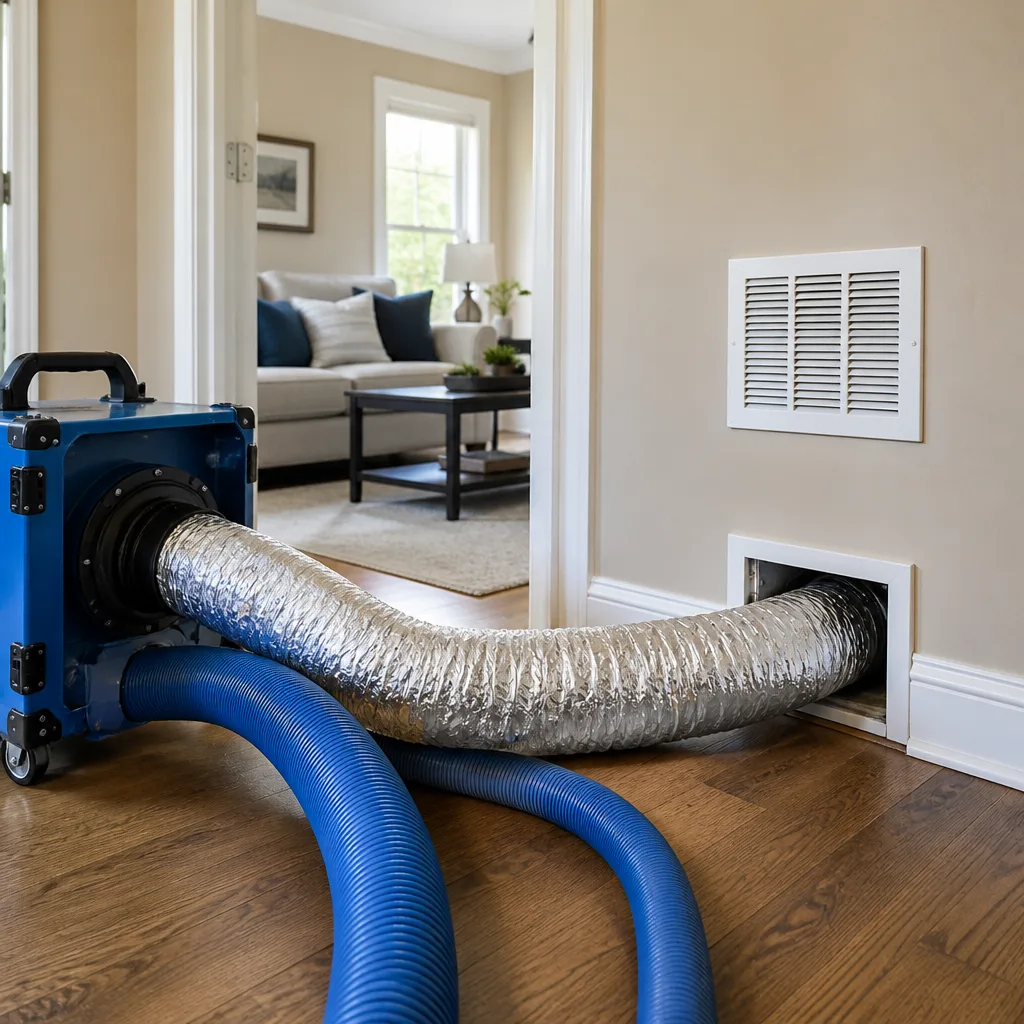 Whole-home duct cleaning
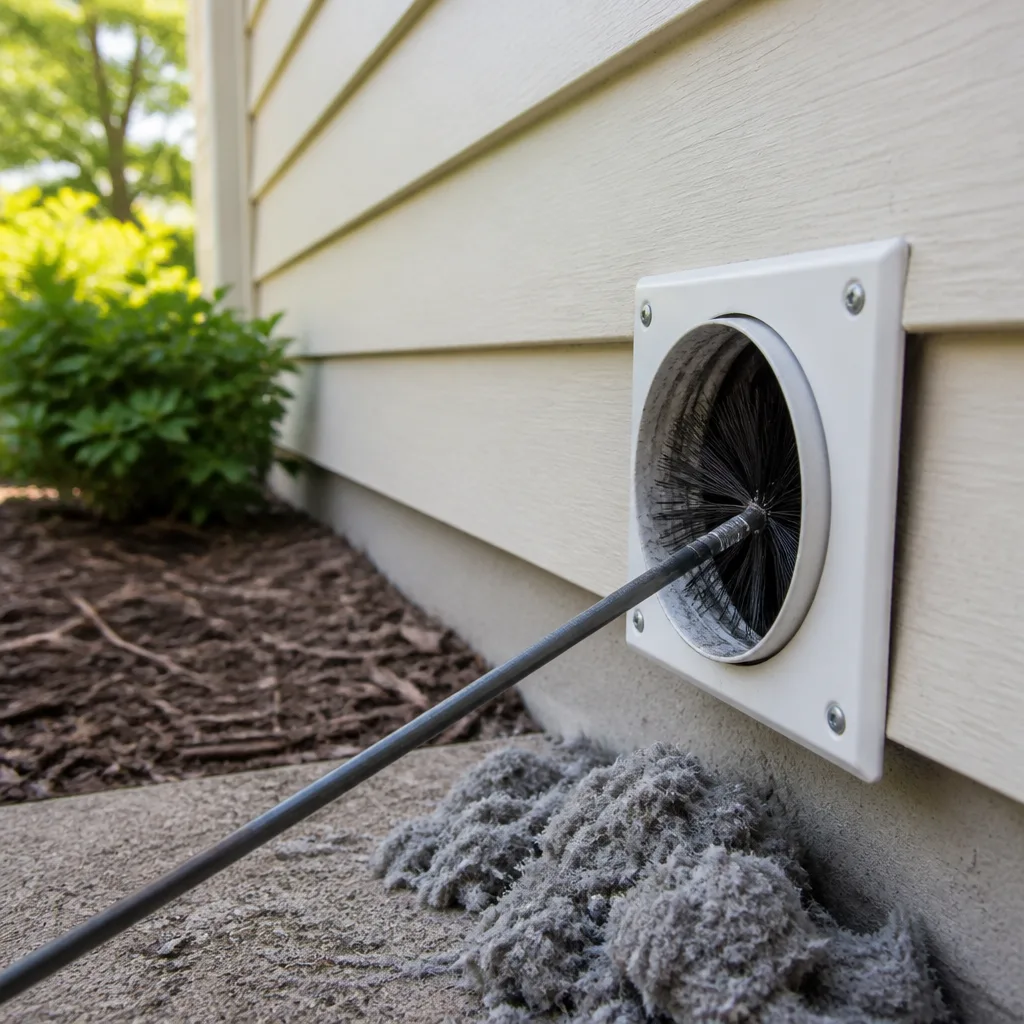 Dryer vent cleaning
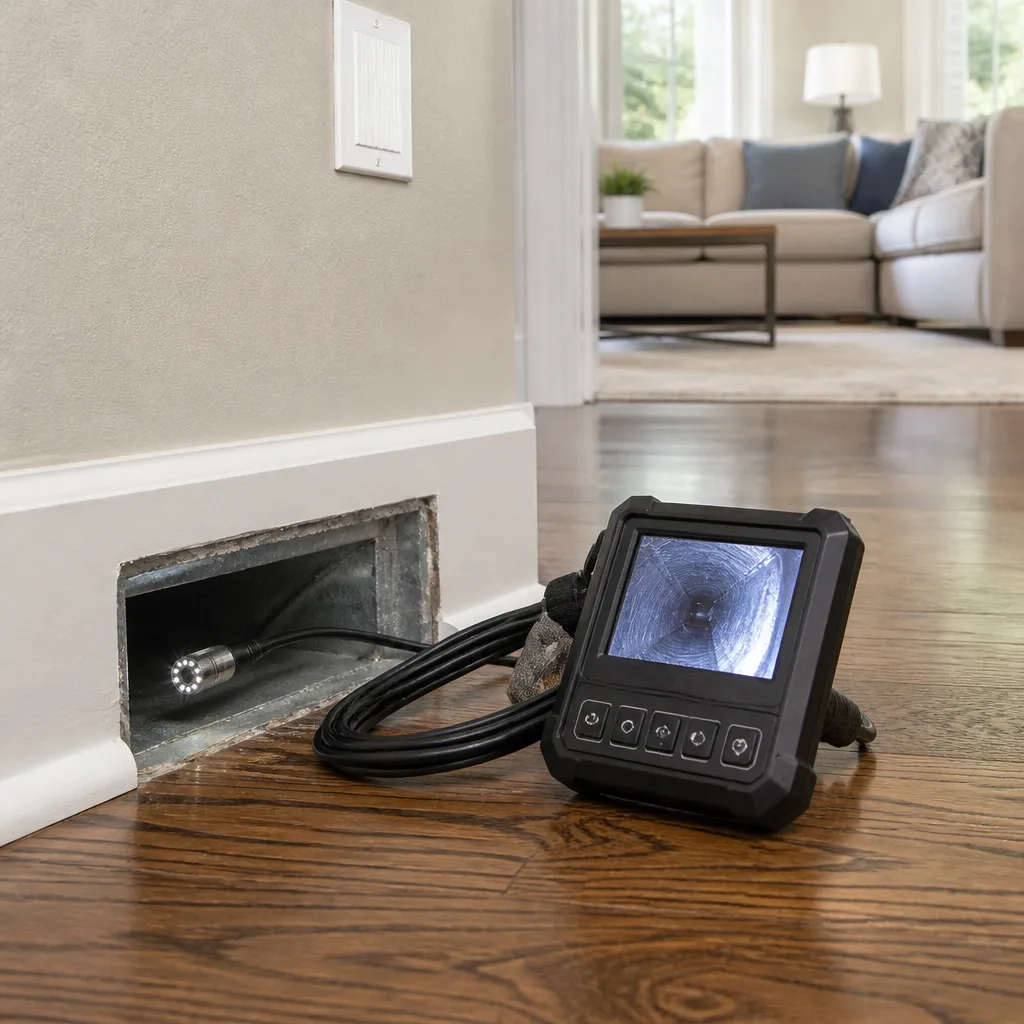 Camera inspection
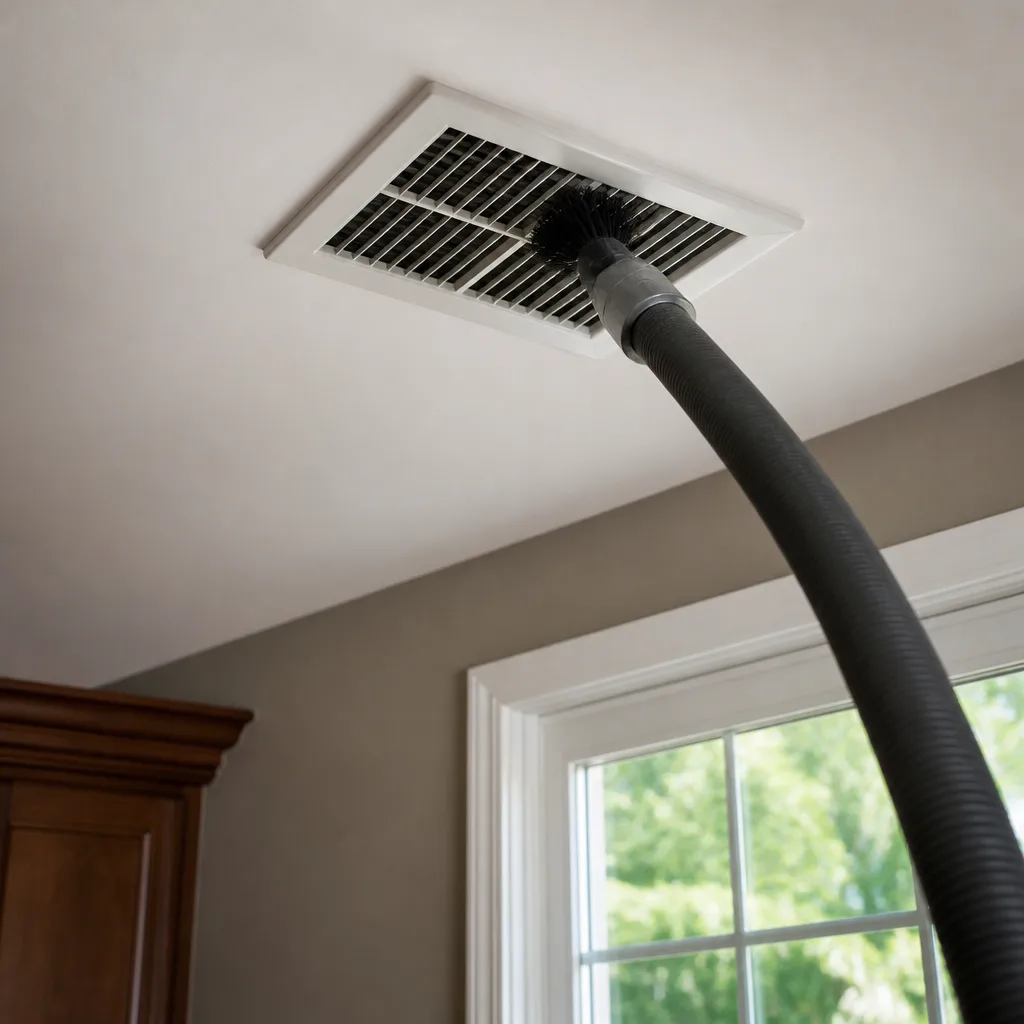 Sanitizing & deodorizing
Whole-system duct and dryer vent check with before-and-after photos - you see exactly what came out of your vents
That "$99 whole-house special" is a bait ad - the real number appears once they are in your hallway, or the "clean" is a shop-vac at the register. We photograph the inside of your ducts before and after instead.
DIY vs Professional Air Duct Cleaning: The Garden Grove Homeowner’s Decision Guide
You can rent a commercial vacuum from a hardware store and clean your own ducts. What you cannot replicate is the negative pressure differential that a truck-mounted or large-format HEPA collection unit creates, and without that, you’re not removing contamination from duct surfaces. You’re rearranging it. That single physical fact reframes the entire DIY-versus-professional question, and it’s the one most Garden Grove homeowners never hear before they spend a weekend with a shop vac and a brush kit. This guide walks through what consumer equipment can and cannot do, where DIY register cleaning genuinely earns its place, and how to know whether your Garden Grove system needs surface tidying or real source removal.
Quick Answer
Professional air duct cleaning wins in almost every case that actually matters, because effective cleaning depends on whole-system negative-pressure containment, not on scrubbing skill. Consumer-grade kits can handle light surface dust at registers and grilles as a maintenance task, but they cannot extract debris already settled throughout the duct runs. If your system has visible accumulation, a recent renovation, or fiberglass-lined ducts, hire a professional.
Styles & brands we work with
- Whole-home duct cleaning
- Dryer vent cleaning
- Camera inspection
- Sanitizing & deodorizing
Table of Contents
- The Physics of Source Removal: Why Negative Pressure Is the Whole Game
- What Consumer-Grade Duct Cleaning Kits Can and Cannot Do
- Where DIY Register and Grille Cleaning Genuinely Helps
- The Fiberglass Liner Risk in Garden Grove Homes
- How to Tell If Your System Needs Professional Cleaning
- A Decision Framework Based on Evidence, Not the Calendar
- What a Professional-Grade Cleaning Actually Involves
- Dryer Vents: The DIY Project That Should Never Be One
The Physics of Source Removal: Why Negative Pressure Is the Whole Game
Duct cleaning works by containment. A professional system seals the supply and return openings, connects a high-volume HEPA collection unit to the main trunk, and puts the entire duct network under negative pressure. Every register and every branch line is then agitated with a rotary brush or compressed-air whip while the collection unit pulls loosened debris toward the vacuum rather than into your living room. The mechanism is not suction strength at a single point. It’s a pressure differential across the whole system.
A shop vac creates localized suction at the nozzle and nothing else. The moment you insert a brush into a duct run, you’re disturbing settled particulate in an unsealed environment, and that particulate goes wherever the air currents take it. In a Garden Grove home with the HVAC fan running or a window cracked, that means the loosened dust, dander, and debris resettle into the room you were trying to clean. You’ve moved the contamination, not removed it.
Three conditions have to be true at the same time for source removal to work:
- The system is sealed. All supply and return registers are covered so air can only enter through the collection point.
- Negative pressure is maintained. The collection unit pulls more air than any leak can supply, so the duct interior stays below room pressure.
- Agitation reaches the surfaces. Rotary brushes, whips, and air tools loosen debris from every square inch of duct wall, not just the floor of the run.
Consumer tools fail all three. The result looks like cleaning because you see dust in the vacuum canister, but the duct surfaces are largely untouched. In our experience, that’s the source of the disappointment many Garden Grove homeowners describe after a DIY attempt: lots of effort, no measurable improvement in air quality.
What Consumer-Grade Duct Cleaning Kits Can and Cannot Do
A typical consumer kit is a drill-driven brush on a flexible rod, sold with a shop vac adapter. It costs a fraction of professional service and it does have honest uses. It is not a fraud, and we don’t treat it like one. It is simply limited by its design.
What these kits do well
- Lifting loose dust and cobwebs from the inside of short, straight register boots you can reach from the room side.
- Cleaning the visible interior of grilles, return-air covers, and floor registers.
- Knocking debris off the last few inches of a branch run near the supply point.
- Spot-treating one problem register after a small spill or a pet accident.
What these kits cannot do
- Reach the middle and far ends of long branch runs, especially the flexible duct common in Garden Grove’s older slab-on-grade homes.
- Establish negative pressure across the whole system. There’s no containment, so loosened debris escapes.
- Clean the main trunk line, which is where the largest volume of accumulated debris sits.
- Remove contamination from the air handler, evaporator coil, or blower wheel, which are part of the same airflow path.
- Handle fiberglass-lined ductwork safely, which we cover below.
If your registers look dusty and the rest of the system was cleaned recently, a kit is a reasonable tool. If the system has never been cleaned, has visible accumulation at the boots, or shares a Garden Grove home with allergy sufferers, the kit will not solve the problem. That’s the honest boundary.
Where DIY Register and Grille Cleaning Genuinely Helps
Register and grille cleaning is a legitimate maintenance task, and we encourage it. You’re not disturbing duct internals. You’re removing the dust that settles on the exposed surfaces and gets blown back into the room each time the system cycles. It’s the lowest-risk thing a homeowner can do, and it extends the useful interval between professional cleanings.
A sensible maintenance routine looks like this:
- Turn the HVAC system off before you touch anything so you’re not fighting airflow.
- Remove each grille or register and wash it in a utility sink or with a hose. Most are held by two screws.
- Wipe the visible boot interior with a damp microfiber cloth. Don’t jam a brush into the run.
- Vacuum the surrounding floor or carpet to catch what fell.
- Let grilles dry fully before reinstalling so you don’t introduce moisture into the boot.
- Repeat at the change of season or whenever you notice visible dust on the vanes.
Alongside this, replace the filter on the schedule the manufacturer prints on the frame. In Garden Grove, where a lot of housing stock dates to the 1950s and 1960s, filter slots are often undersized for modern filters, so check the fit rather than forcing a thicker filter in. If your filter cabinet won’t take a high-MERV filter, that’s a conversation about a proper filter upgrade, not a reason to skip filtration altogether.
What DIY register cleaning does not do is reset the clock on the system as a whole. It keeps the surface clean. It doesn’t touch the volume.
The Fiberglass Liner Risk in Garden Grove Homes
This is the part of the DIY question that has real safety and cost stakes, and it’s where we see the most expensive mistakes. Many homes in Garden Grove, particularly in the older neighborhoods around the downtown core and the mid-century tracts off Garden Grove Boulevard, have ductwork lined on the inside with fiberglass acoustic insulation. That liner is there for noise reduction and thermal control. It’s also fragile.
Aggressive brushing inside lined ductwork does not merely dislodge dust. It breaks fibers free from the liner surface. Those fibers are then carried through the supply air into the living space, where they become an inhalation concern, particularly for children, older adults, and anyone with respiratory sensitivity. Once the liner is compromised, it does not heal. The duct either gets relined or replaced, and that is a far more expensive project than the cleaning you were trying to avoid paying for.
A professional technician identifies liner type before choosing agitation tools. On lined runs, the approach shifts to gentler methods that remove contamination without eroding the liner surface, and in some cases the liner is flagged for repair or replacement rather than cleaning. We carry Guardsman and Abatement Technologies equipment specifically to handle contamination at the level where a compromised liner becomes a health issue rather than a dust issue.
If you don’t know whether your ducts are lined, do not run a drill brush through them to find out. That’s a five-minute question for a technician and a potentially four-figure mistake to answer yourself.
How to Tell If Your System Needs Professional Cleaning
Time since the last cleaning is the worst possible reason to schedule one, and it’s the one most marketing leans on. What actually matters is evidence in the system. Here’s a practical checklist for a Garden Grove homeowner to run through, roughly in order of how strongly each signal points to a real problem.
Signals that point to professional cleaning
- Visible debris inside the supply boots. Shine a flashlight up into the register. If you see a mat of dust, hair, or drywall dust, the run behind it almost certainly holds more.
- Recent renovation. Drywall dust, sawdust, and construction particulate settle into every branch of the system. Post-renovation cleaning is one of the clearest professional cases.
- Musty or stale odor when the system starts. Often a sign of biological growth on the coil or in a damp section of duct.
- Visible mold at a register or on the coil face. This is not a DIY situation. Stop and call.
- Pest activity. Rodent droppings or nesting material in ductwork is a contamination event, not a dust problem.
- Persistent dust on surfaces shortly after cleaning the room, which suggests the system is redistributing it rather than exhausting it through filtration.
- Allergy or asthma symptoms that worsen inside the home and ease outside.
Signals that point to maintenance only
- Dusty grilles but clean boots behind them.
- No recent renovation, no pets with significant shedding, no moisture problems.
- A filter that’s been changed on schedule and a system with no odor.
- Someone in the home has already had the system professionally cleaned and the registers are simply due for a wipe-down.
The decision should be driven by what you can see and smell, not by a marketing calendar. A clean system in a well-maintained Garden Grove home with a good filter can go years without a full professional cleaning. A system that just survived a kitchen remodel needs one now.
A Decision Framework Based on Evidence, Not the Calendar
Here’s how we’d walk a Garden Grove homeowner through the choice. It’s a simple decision tree, and it holds up regardless of what a sales flyer tells you.
- Does your system have any of the “professional cleaning” signals above? If yes, book a professional cleaning. DIY will not resolve them, and in lined ductwork it can make things worse.
- Are your registers the only thing that’s dirty, with clean boots behind them? That’s a DIY maintenance task. Clean the grilles, replace the filter, and revisit in a season.
- Has the home recently been renovated, or has it been vacant and musty? Professional cleaning plus a sanitizing pass. Renovation dust in a sealed system is not something a shop vac will pull out.
- Is anyone in the home sensitive to dust, mold, or particulates? Default to professional cleaning, and ask about filtration upgrades at the same time.
- Do you have dryer vent concerns? That’s never a DIY question. We cover why below.
A professional cleaning should be paired with filtration that keeps the system cleaner afterward. Honeywell and Aprilaire filters and purifiers are the platforms we install because they give the homeowner something durable to maintain. Cleaning a system and then running it with a cheap fiberglass filter is one step forward, one step back.
If you’re not sure where you land in the tree, the honest answer is to get an inspection first. Any quote you receive should be based on what the technician sees in your system, not a flat rate quoted over the phone.
What a Professional-Grade Cleaning Actually Involves
A real air duct cleaning visit is a defined sequence, and knowing it helps you evaluate any quote you receive. Here’s the process a properly equipped contractor runs, start to finish.
- Inspection and liner identification. Before any tool goes in, the technician checks duct construction, liner type, and contamination level, and photographs anything notable.
- Containment. Registers, grilles, and openings are sealed. A HEPA collection unit is connected to the main trunk and brought to negative pressure.
- Source removal. Rotary brushes, compressed-air whips, and hand tools agitate every branch while the collection unit pulls debris into containment. Rotobrush and Nikro platforms are purpose-built for this stage.
- Air handler and coil cleaning. The blower wheel, evaporator coil, and drain pan are cleaned as part of the same system, not skipped. This is the HVAC cleaning side of the job.
- Sealing and repair. Any leaking joints, disconnected boots, or compromised runs are sealed. Clean ducts that leak re-accumulate debris quickly.
- Sanitizing if needed. Where biological growth or contamination warrants it, a sanitizing pass runs through the cleaned system.
- Verification. Before-and-after photos of the ductwork are shown to the homeowner, along with a walkthrough of what was found and what was done.
The result should be documented, not just performed. A cleaning you can’t verify is a cleaning you have to take on faith, and in this industry that’s exactly the failure point that leaves homeowners second-guessing every quote.
Dryer Vents: The DIY Project That Should Never Be One
Dryer vent cleaning is a fire-safety service, and it is not something a homeowner should handle with a consumer kit. Lint is highly combustible. It accumulates inside the vent run, often in a compressed, damp mass that a hose attachment cannot reach. A dryer that’s taking longer to dry clothes, or that feels hot to the touch on the cabinet, is a signal worth taking seriously, and a partially blocked vent is a fire risk the homeowner cannot assess by sight.
dryer vent cleaning is one of the services we take as seriously as duct work because the stakes are different. A poorly cleaned dryer vent doesn’t just reduce efficiency; it can be the ignition point for a fire that starts when no one is home. Do not run a consumer brush kit down a dryer vent and call it done. Get it inspected and cleaned by someone with the tools to verify the run is clear from the dryer to the exterior termination.
The same principle applies to ductwork: a tool that removes visible dust from the accessible portion while leaving the rest of the run untouched is worse than no cleaning at all, because it creates a false sense of completion. Safety-critical systems deserve verification, not optimism.
See the difference
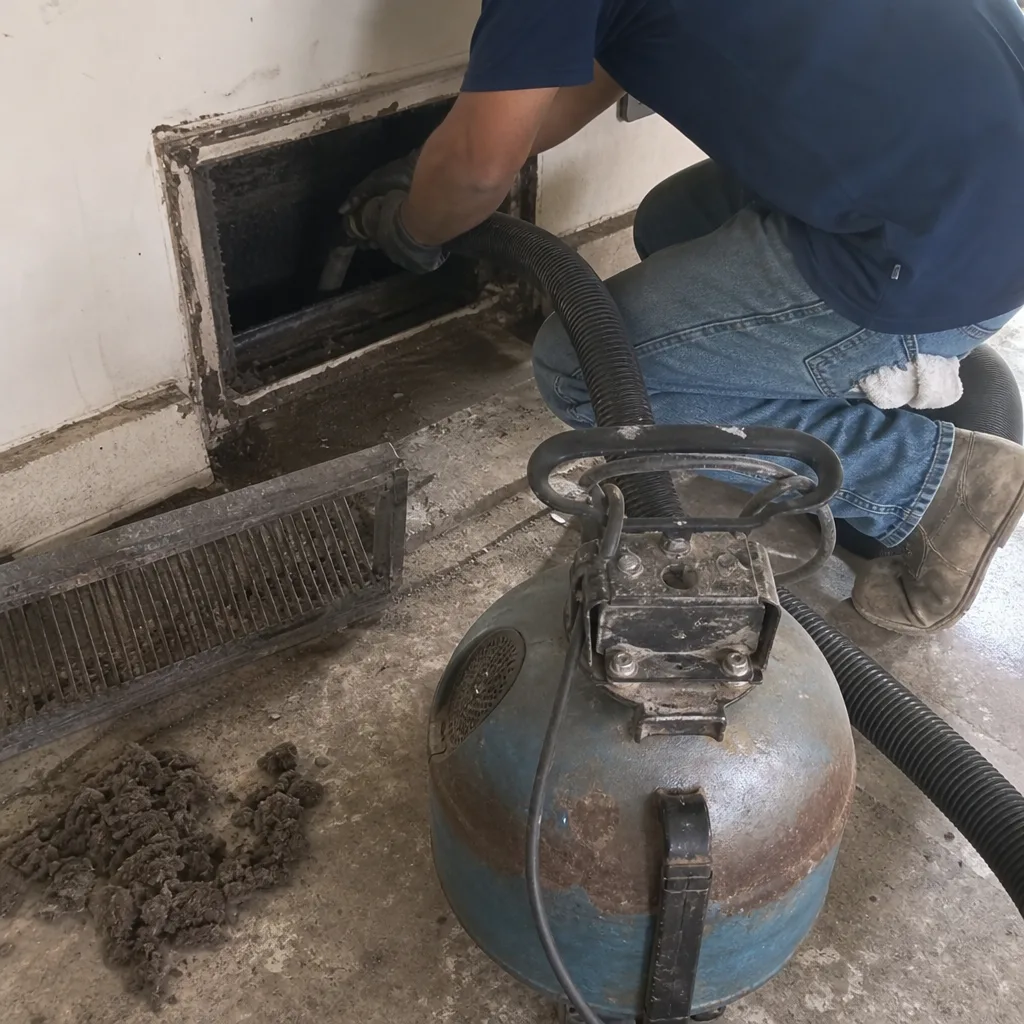 Before
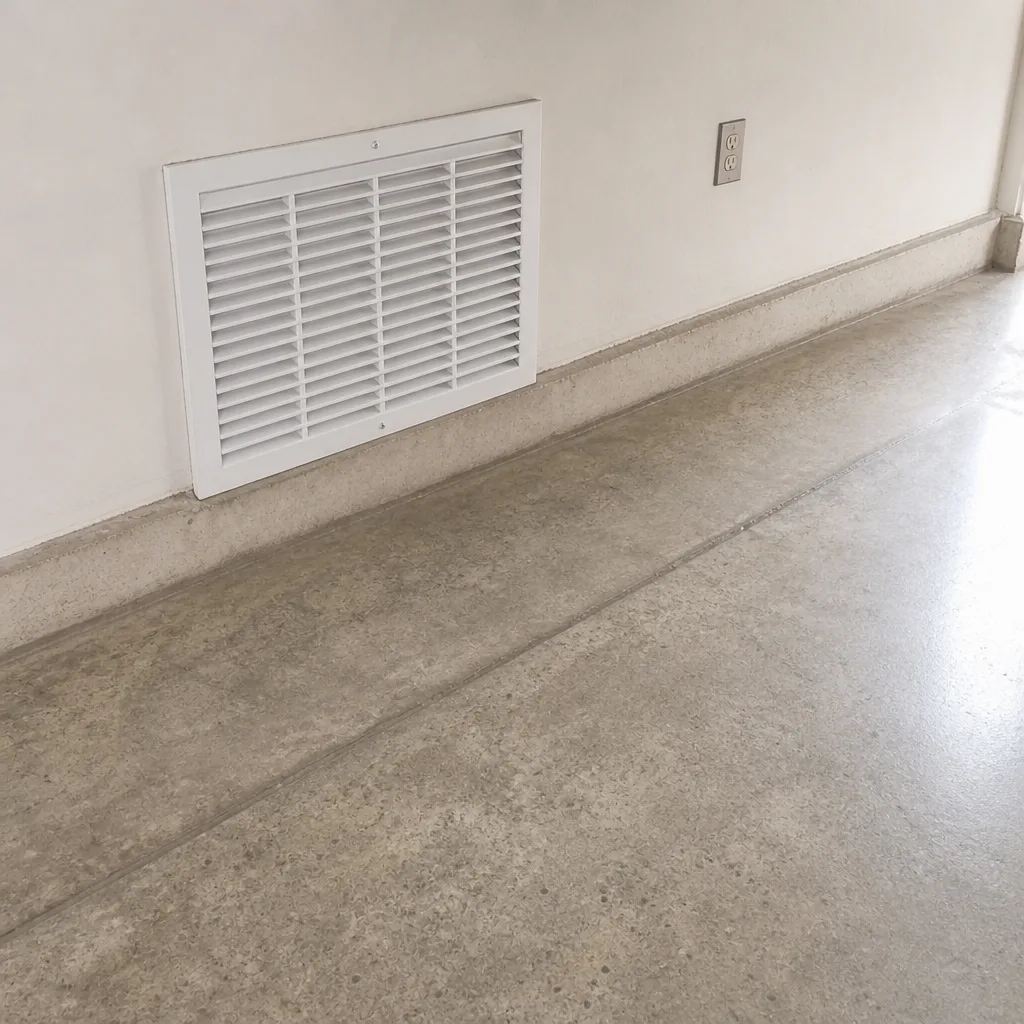 After
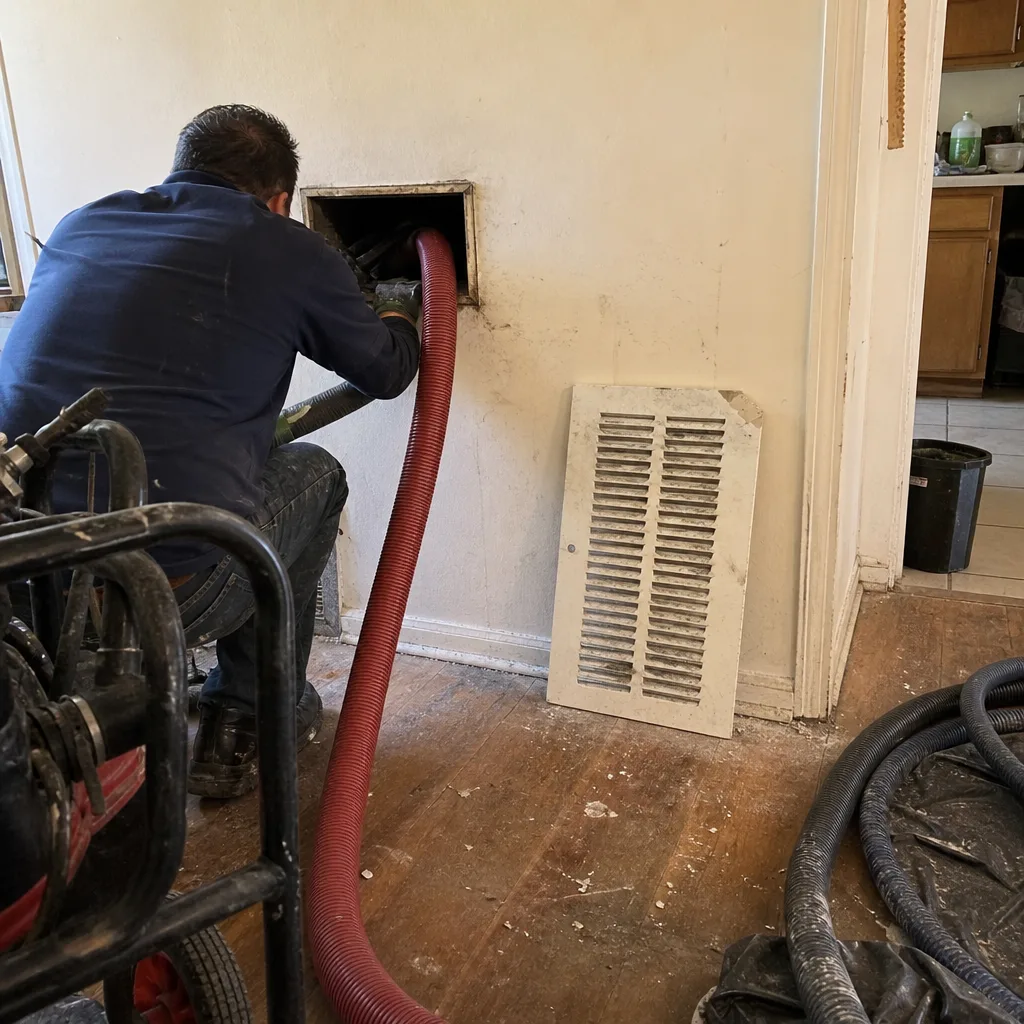 Before
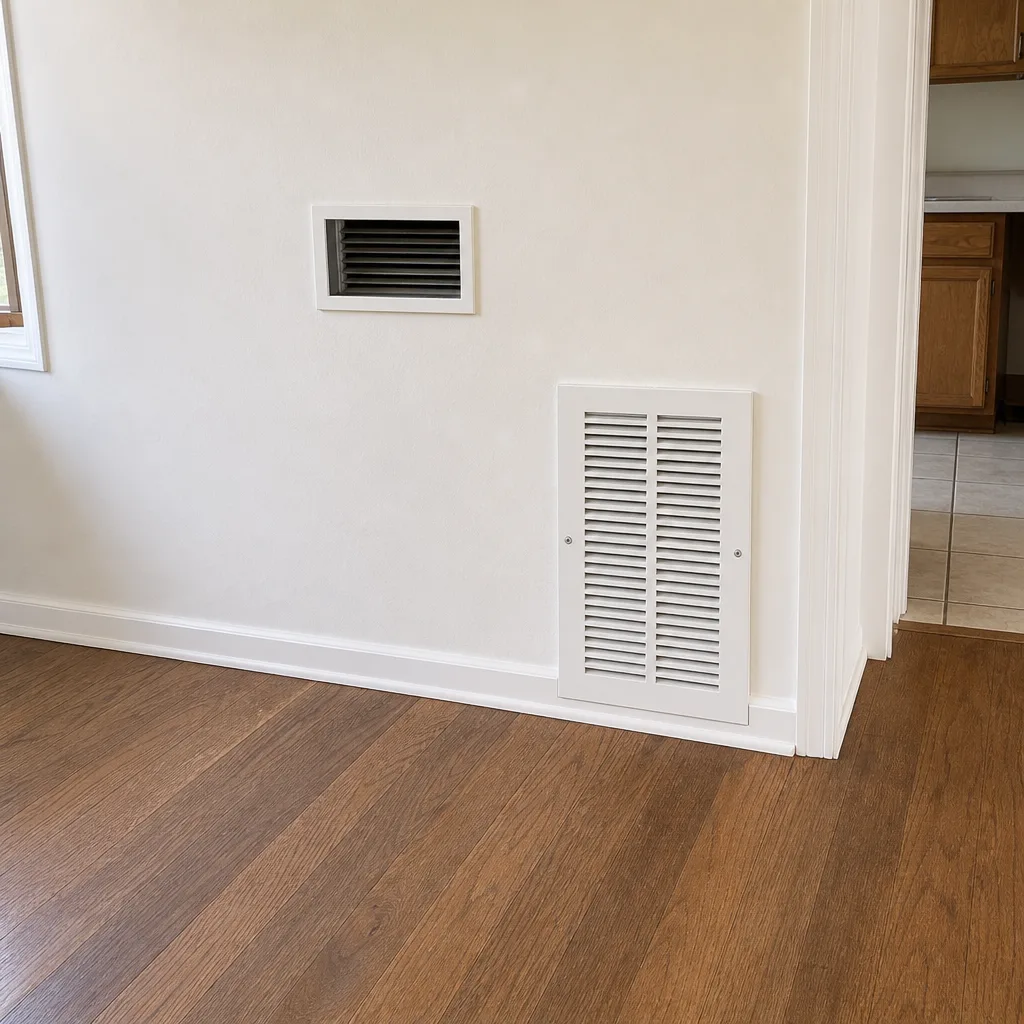 After
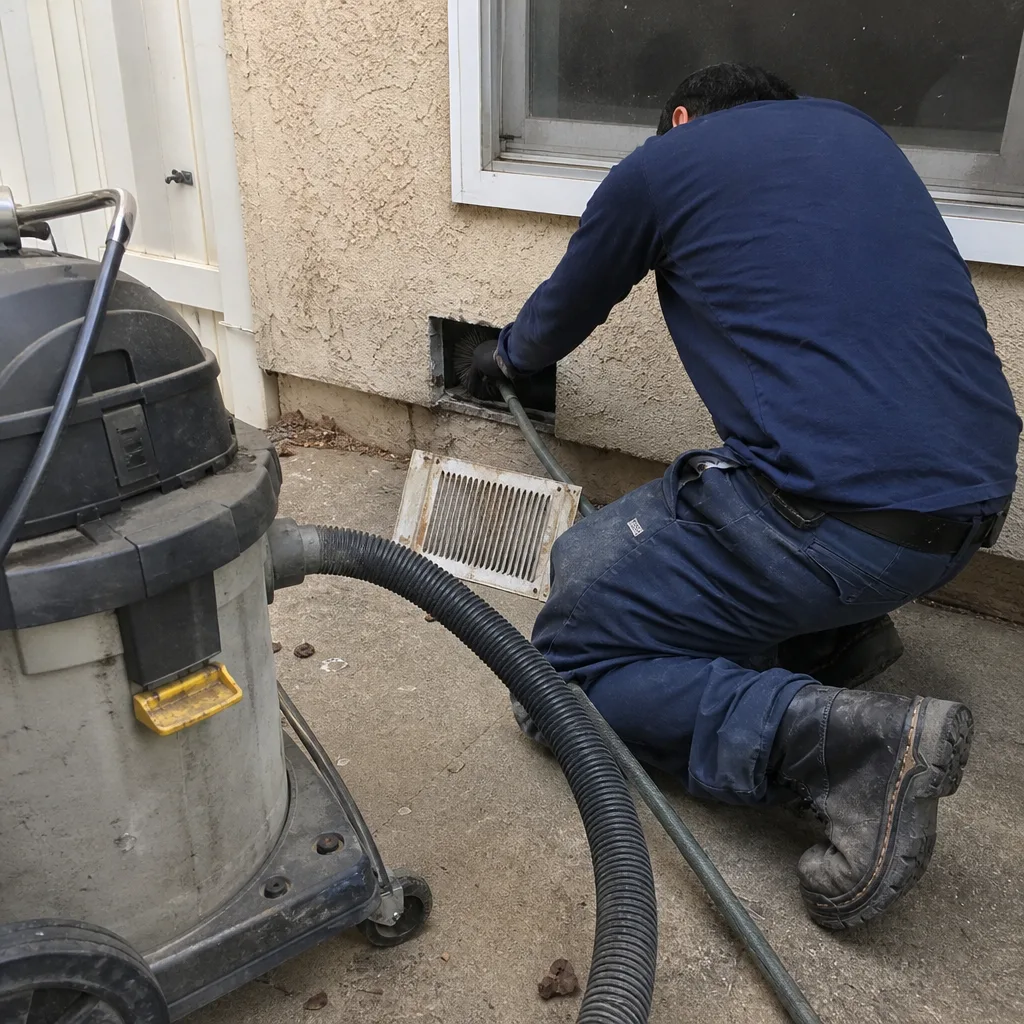 Before
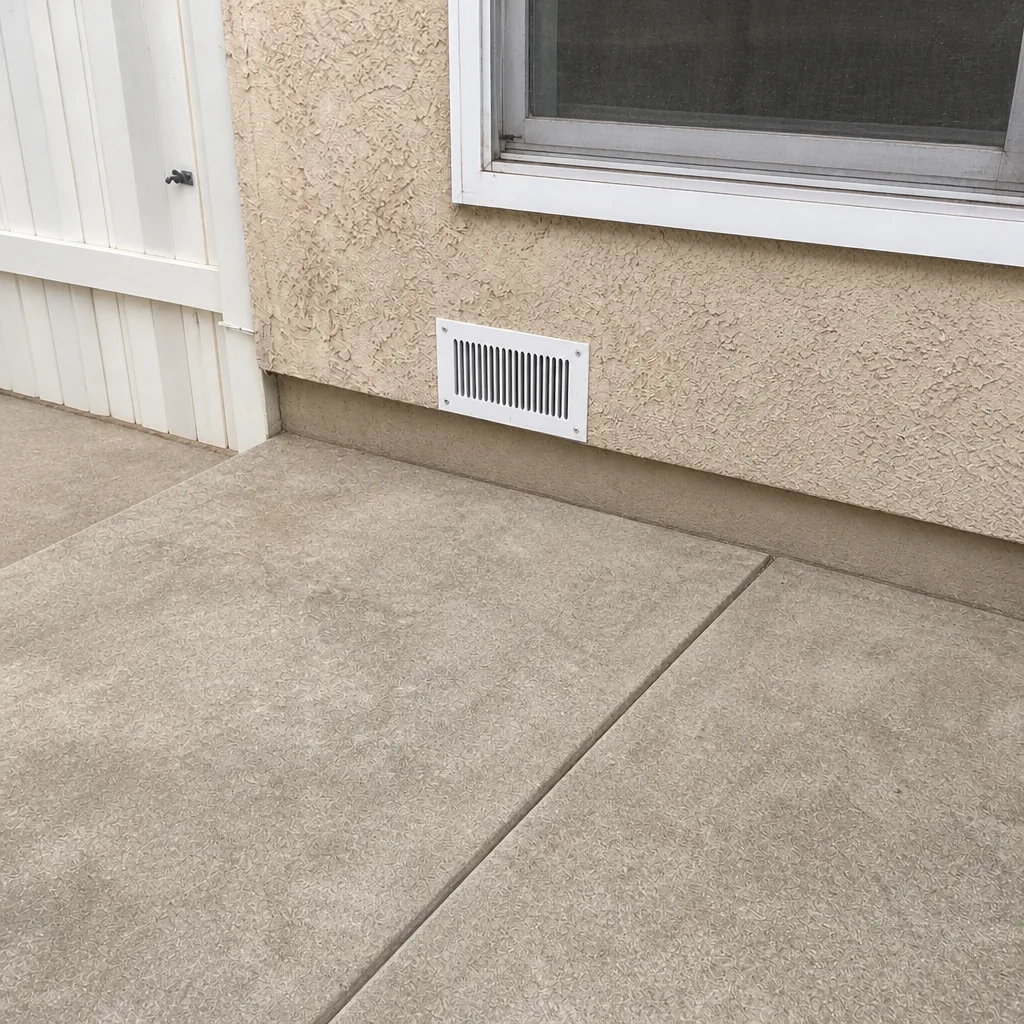 After
Common Mistakes to Avoid
- Running a drill brush through unknown ductwork. If the run is fiberglass-lined, aggressive brushing releases fibers into the supply air. Identify the liner first, or hire someone who will.
- Running the HVAC fan while you clean. The fan distributes anything you disturb throughout the home instead of toward the vacuum. Turn it off, and expect the system to need a filter change afterward.
- Trusting a quote that only says one price over the phone. A cleaning priced before anyone has seen the system is either padded or a teaser. Get a written estimate based on the actual system.
- Cleaning ducts but not the coil or air handler. The blower wheel and coil are part of the same airflow path. Clean the ducts only, and the accumulated debris on the coil keeps seeding the system.
- Cleaning without sealing afterward. Leaking joints undo the cleaning. Clean, repair, seal, and sanitize as a sequence, not separate sales.
- Forgetting the dryer vent. It’s the highest-stakes item in the home’s duct network and the one most often skipped because it isn’t part of the HVAC system.
- Buying a cleaning because of a coupon. Low headline prices too often become far larger invoices once a technician is on site. Ask for a written per-system price before anyone starts.
When to Call a Professional
Call a professional when your system shows evidence rather than age: visible debris in the boots, musty odor when the air kicks on, a recent renovation, visible mold, or rodent activity. Call when anyone in the home has respiratory sensitivity and the system hasn’t been verified. Call when you don’t know what kind of duct lining you have and you’re about to run a brush through it. Call when the dryer is taking longer to dry clothes, because that vent is a fire concern. And call when you want the work documented, with before-and-after photos and a written estimate, so you know exactly what you paid for.
Garden Grove Air Duct Cleaning Pros offers free estimates in Garden Grove. Call (833) 382-8410. We answer 24/7. Fast dispatch from 7am to 7pm, Sunday through Friday. Our technicians have up to 14 years of experience, and every visit uses professional-grade Rotobrush and Nikro equipment, not consumer tools.
Frequently Asked Questions
Pricing for air duct cleaning in Garden Grove depends on system size, the number of runs, contamination level, and whether duct sealing or repair is needed. It’s quoted per system rather than per vent, so the range varies widely. The written estimate sets the final price, and it should be based on what a technician actually sees in your system, not a flat number quoted over the phone. Call (833) 382-8410 for an exact quote. Estimates are free.
Low quotes usually reflect equipment that isn’t capable of whole-system negative pressure, so the “cleaning” ends up being surface-level. Others quote a low teaser price and add items on site. A legitimate quote is per system, agreed before work starts, and backed by before-and-after photos. If a quote doesn’t say what equipment is used and what’s included, it isn’t comparable. Call (833) 382-8410 to talk through what a fair quote looks like for your home.
Ask for before-and-after photos of your own ducts and a walkthrough of what the technician found and did. A documented cleaning includes verification, not a verbal reassurance on the way out the door. Reputable contractors expect the question and answer it without hesitation. Call (833) 382-8410 if you want a quote that includes documented verification.
The honest answer is that it depends on evidence, not a fixed calendar. Homes with pets, allergy sufferers, recent renovations, or moisture problems need it more often than a well-maintained home with a good filter. Many Garden Grove homes can go several years between professional cleanings if the filter is changed on schedule and the registers are kept clean. Between cleanings, register and grille cleaning is a legitimate DIY task.
You can clean registers and grilles, and you should. What you cannot replicate is the negative-pressure containment that professional equipment creates, which is the mechanism that removes contamination rather than redistributing it. Consumer kits handle surface dust at the boots. They do not clean the trunk line or the far ends of long runs. For a system with visible accumulation, hire a professional. Call (833) 382-8410 to find out what a proper cleaning involves for your home.
It can be, if the ducts are fiberglass-lined. Aggressive brushing releases fiber particles into the supply air, and liner damage isn’t reversible. Rodent or mold contamination is also a professional matter, not a shop-vac job. If you don’t know what kind of duct lining you have, don’t run a brush through it to find out. Call (833) 382-8410 for a professional inspection before you do anything.
The Bottom Line
The DIY-versus-professional question isn’t about skill. It’s about physics. Source removal depends on negative pressure containment, and consumer equipment cannot achieve it. That reframes the choice as surface cleaning versus actual cleaning, not cheap versus expensive. Register and grille cleaning is a legitimate homeowner task. The trunk line, the coil, the air handler, and the dryer vent are professional territory, especially in Garden Grove homes with fiberglass-lined ductwork. Choose based on evidence in your system, not time since the last cleaning, and insist on a written per-system price with before-and-after photos.
Garden Grove Air Duct Cleaning Pros is a full-system indoor air quality contractor, not a one-task cleaning crew. We use Rotobrush and Nikro professional duct cleaning systems, Abatement Technologies equipment for contaminant-level work, and Honeywell and Aprilaire products so the filtration that follows a cleaning keeps it cleaner. You can start by exploring Garden Grove Air Duct Cleaning Pros or call us directly. Call (833) 382-8410. We answer 24/7. Fast dispatch from 7am to 7pm, Sunday through Friday. Free estimates, one price per system agreed before work starts, and before-and-after photos of your own ducts.
Written by the team at Garden Grove Air Duct Cleaning Pros.