
Last updated November 24, 2026
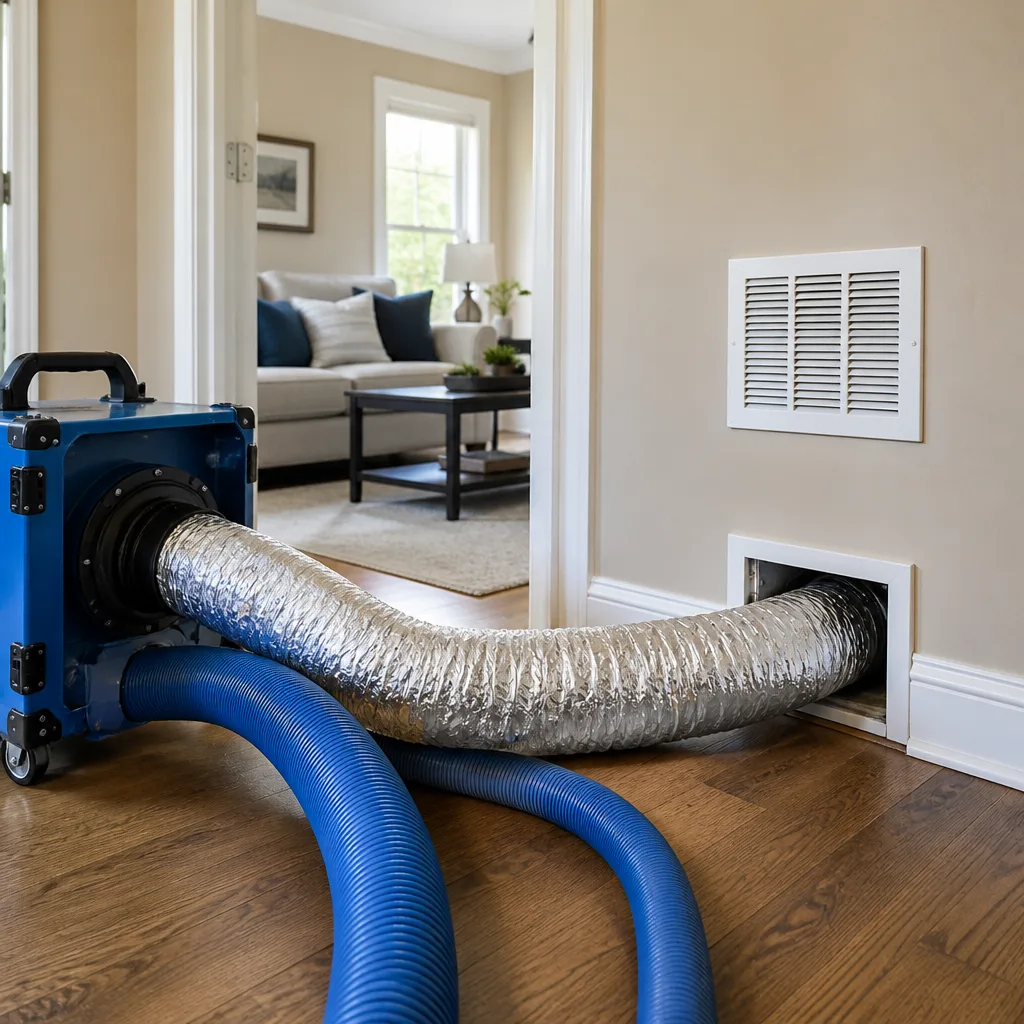 Whole-home duct cleaning
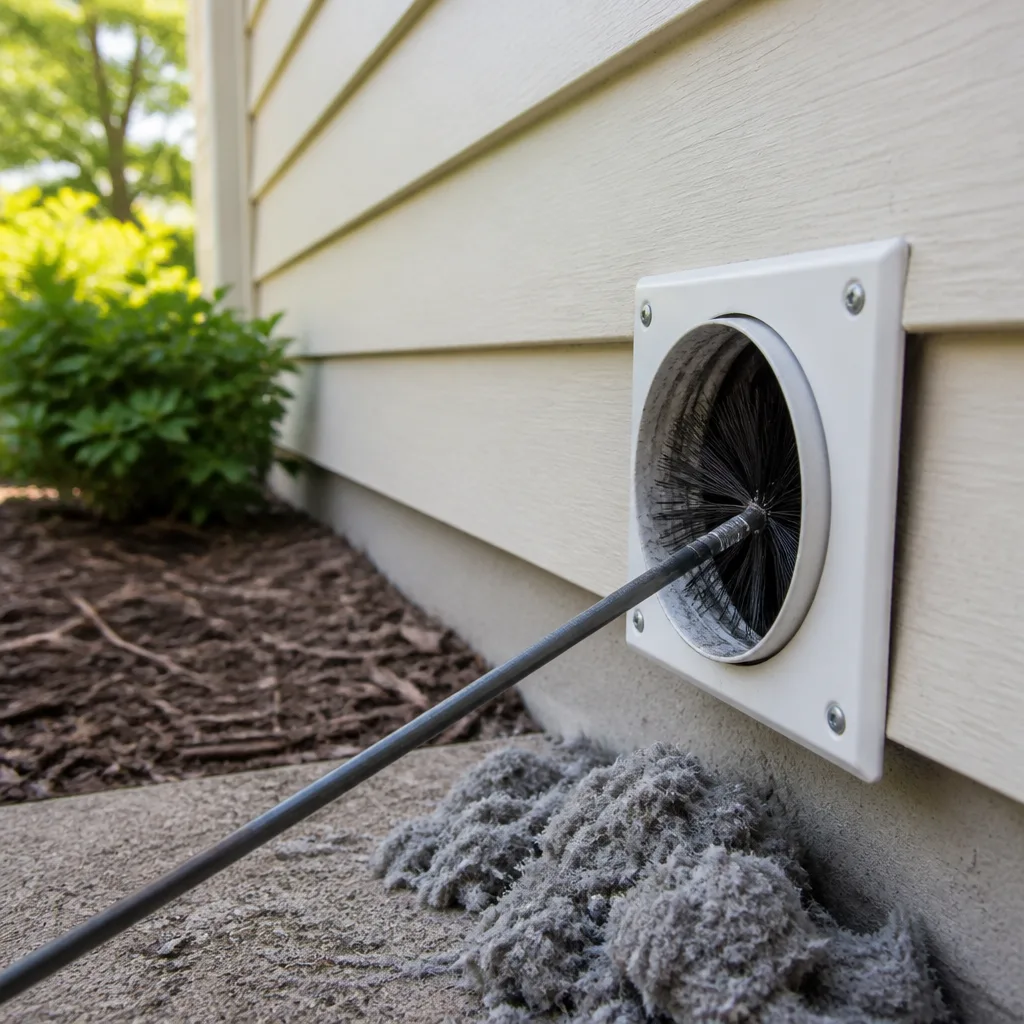 Dryer vent cleaning
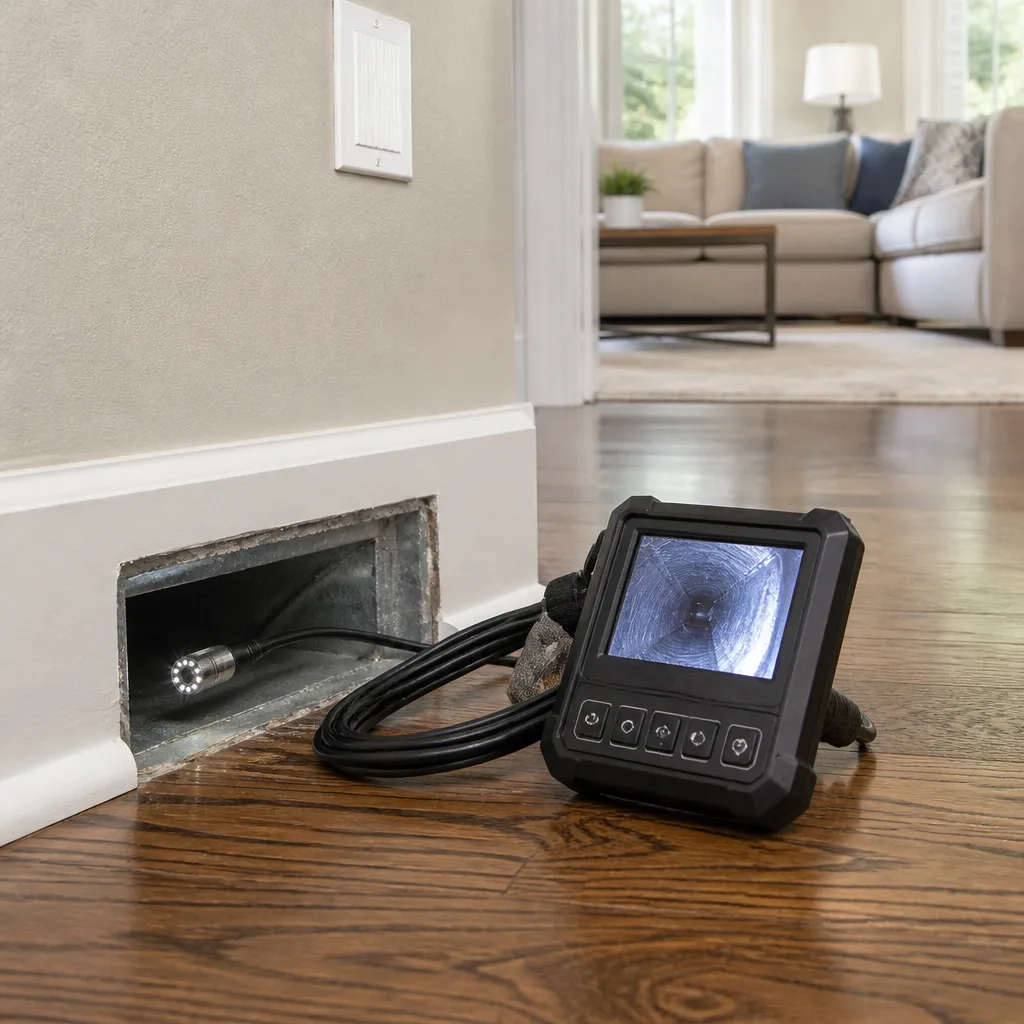 Camera inspection
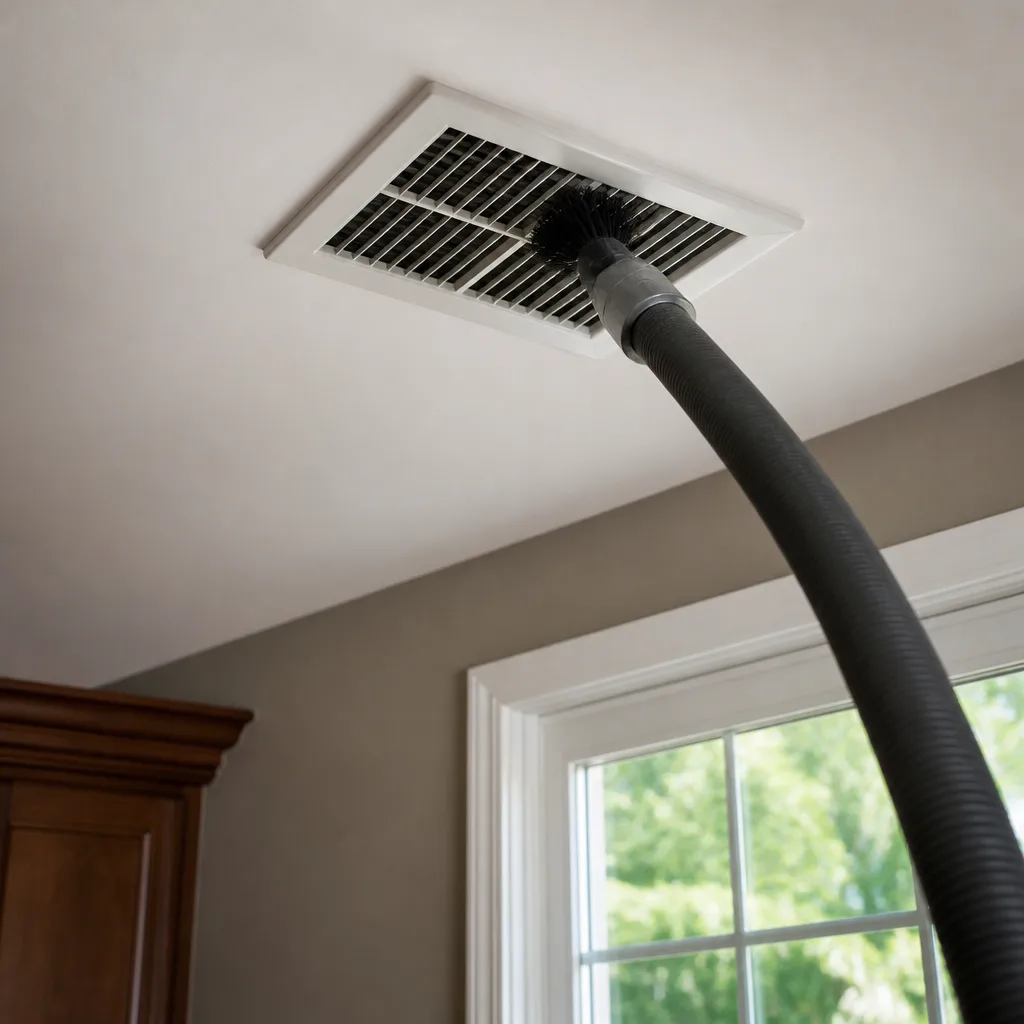 Sanitizing & deodorizing
Whole-system duct and dryer vent check with before-and-after photos - you see exactly what came out of your vents
That "$99 whole-house special" is a bait ad - the real number appears once they are in your hallway, or the "clean" is a shop-vac at the register. We photograph the inside of your ducts before and after instead.
How to Hire an Air Duct Cleaning Contractor in Garden Grove: A Step-by-Step Guide
In California, anyone with a truck and a vacuum can legally market themselves as an air duct cleaning company. There is no state contractor’s license specific to duct cleaning. That means the $49 coupon mailer and the NADCA-certified specialist are operating under identical legal standing, until you look at what they actually bring to the job. In Garden Grove, where most homes run forced-air systems year-round in a mild, dry climate that keeps dust moving, the difference between a shop vac and a purpose-built collection unit shows up in your air and your energy bill. This guide gives you a concrete way to screen contractors before you let them near your system: equipment questions, credential checks, and the paperwork a real professional leaves behind.
Quick Answer
To hire an air duct cleaning contractor in Garden Grove, verify the contractor’s NADCA credential status and equipment before booking, ask specifically what vacuum collection unit and filtration they use, request a pre-service walkthrough instead of a phone quote, and confirm you’ll get post-job documentation of what was cleaned. Skip anyone who quotes a flat teaser price over the phone or can’t tell you the CFM rating and filtration class of their collection unit. A legitimate contractor assesses your system first, then prices the whole job in writing.
Styles & brands we work with
- Whole-home duct cleaning
- Dryer vent cleaning
- Camera inspection
- Sanitizing & deodorizing
Table of Contents
- Why California Has No Duct Cleaning License and What That Means for You
- How to Verify NADCA Certification Before They Arrive
- The Equipment Questions That Separate Pros from Pretenders
- Why a Pre-Service Walkthrough Matters More Than a Phone Quote
- Pricing Red Flags: What Cheap Quotes Actually Signal
- What a Proper Service Agreement Should Include
- Post-Job Documentation: Your Record of Work Performed
- Beyond Cleaning: Repair, Sealing, and Filtration Upgrades
Why California Has No Duct Cleaning License and What That Means for You
California requires a contractor’s license for work above a certain dollar threshold, but there is no license specifically for air duct cleaning. A general handyman, an HVAC company, and a dedicated duct cleaning outfit can all legally advertise the same service. The state doesn’t draw a line between them, so the responsibility for vetting falls squarely on the homeowner. In Garden Grove, that means the screening work is yours to do.
This isn’t a reason to panic. It’s a reason to ask better questions. Because no single license proves competence, the proof lives in three places: professional certifications, the equipment on the truck, and the documentation you receive. Those are things you can check before a technician ever sets foot in your home.
The gap matters because duct cleaning done wrong can make air quality worse, not better. A weak vacuum with no real collection unit can stir settled dust back into your living space. A company that only “air sweeps” without contact vacuuming may loosen debris that then resettles in the ducts. The result looks clean at the register and isn’t clean in the system. In our experience, the contractors who skip the certification and equipment questions are the same ones who skip the parts of the job you can’t see.
The practical takeaway: treat “licensed and insured” as a baseline, not a credential. Then screen on the things California doesn’t regulate, which is exactly what the rest of this guide covers.
How to Verify NADCA Certification Before They Arrive
The NADCA (National Air Duct Cleaners Association) certification is the closest thing to a recognized credential in this trade. It’s not a state license, but it’s a professional standard that requires the contractor to meet defined training and equipment criteria. Verifying it before booking is a reasonable screening step.
Here’s how to check, in order:
- Ask for the company’s NADCA membership or certification status directly. A real credential holder answers without hesitation.
- Look up the company in NADCA’s member directory. The association maintains a searchable list of member firms. If they claim certification but don’t appear, ask why.
- Ask whether the person doing the work has completed NADCA’s Air Systems Cleaning Specialist (ASCS) training. Certification at the company level and certification of the individual technician are related but distinct.
- Confirm liability insurance and workers’ compensation coverage in writing. Ask for a certificate of insurance before the job. A legitimate contractor provides one.
- Check whether the certification is current. NADCA credentials require ongoing renewal. A lapsed certification isn’t the same as an active one.
If a contractor can’t tell you their certification status or hesitates when asked for proof of insurance, that’s your answer. Move on. In Garden Grove, where the market has plenty of legitimate options, there’s no reason to accept vague answers.
The verification is quick, and it changes the conversation. A contractor who knows you’ve done the check tends to arrive prepared and to walk the job with confidence. One who hasn’t may decide the job isn’t worth their time, which saves you both a bad appointment.
The Equipment Questions That Separate Pros from Pretenders
Equipment is where the real differences show. A consumer vacuum and a professional collection unit are not the same tool. The questions below are the ones that reveal whether a contractor is set up for a proper clean or a surface pass.
Ask these before you book:
- What type of vacuum collection unit do you use, and what’s its CFM rating? CFM (cubic feet per minute) measures airflow. A purpose-built unit moves enough air to pull debris from the full duct run. A shop vac doesn’t. Ask for the number.
- Is the collection unit HEPA-filtered? HEPA filtration captures fine particulates at the exhaust so they don’t blow back into your home. For allergy-sensitive households in Garden Grove, this one question matters.
- Will you use contact vacuuming, air sweeping, or both? Contact vacuuming uses a tool that physically touches and agitates the duct interior. Air sweeping uses compressed air to dislodge debris toward the collection unit. A complete job typically uses both. An air-sweep-only service is incomplete.
- What equipment brands do you work with? Professional contractors name their platforms. We use Rotobrush and Nikro systems, purpose-built duct cleaning platforms used in commercial and industrial IAQ work, along with Abatement Technologies equipment designed for contaminant-level remediation. A contractor who can’t name their equipment is worth a follow-up question.
- Do you clean the air handler and blower, or just the ducts? The air handler is where much of the system’s dust collects. Cleaning ducts without addressing the air handler is a partial job.
- Do you also clean the dryer vent? Dryer vent cleaning addresses a leading household fire risk that duct-only competitors often ignore. Ask if it’s included or available separately.
The answers tell you a lot. A contractor who can name the collection unit’s airflow and filtration class, describe their brushing tools, and explain why an air handler clean matters is set up for the work. One who says “we use a big vacuum” hasn’t answered the question.
In a mild climate like Garden Grove’s, the system runs through dry months with the windows open and closed at different times of year, pulling dust from landscaping, streets, and the surrounding urban air. That dust settles in the ducts, the air handler, and the blower. Equipment that reaches all three does a complete job. Equipment that reaches only the visible registers does not.
Why a Pre-Service Walkthrough Matters More Than a Phone Quote
A legitimate contractor assesses your system before quoting. A phone quote for a whole-house clean without a walkthrough is a guess, and guesses lead to the bait-and-switch pricing that gives this trade its reputation. The walkthrough is where a real professional looks at what the job actually requires.
During a proper walkthrough, the contractor should assess:
- The number and location of supply vents. A two-story Garden Grove home with a bonus room has a different vent count than a single-story ranch. The count drives the time and equipment needed.
- The number of return vents. Returns are often fewer and larger, and they collect differently. The contractor should identify each one.
- The system configuration and the accessibility of the air handler. Some air handlers sit in a closet or attic with easy access. Others are boxed in. Accessibility affects how the job is done and how long it takes.
- The type and condition of the ductwork. Rigid metal, flex duct, and fiberboard all behave differently. The contractor should note any visible damage, disconnected sections, or crushed runs.
- Whether a duct repair or sealing step will be needed. Cleaning around a leak is a partial fix. Repairing and sealing it keeps the system clean afterward.
The walkthrough gives you a chance to see the contractor’s process up close. Does the walkthrough come before a price, or does a price come first? Does the contractor show you what they’re looking at, or stay vague? Ask questions during the walk. A professional answers them and explains what they’re seeing.
We recommend treating the walkthrough as the real interview. Reviews tell you what past customers thought. The walkthrough tells you what this contractor will actually do in your Garden Grove home. Estimate in writing follows the walkthrough, not the other way around.
Pricing Red Flags: What Cheap Quotes Actually Signal
A very low whole-house quote is a signal, not a deal. When a contractor advertises a teaser price for a whole-system clean, the number usually doesn’t include the full job, and the upsell comes once the technician is in the door. Homeowners who’ve been through this know the drill: a low coupon price that becomes a much larger invoice once the work has started.
Here’s what the pricing red flags look like:
- A flat per-vent price. Every home is different. Per-vent pricing ignores the vent count, system configuration, and condition of the ducts. It’s a marketing number, not an estimate.
- A teaser price that sounds impossible. If a whole-house quote is dramatically below the rest of the market in Garden Grove, the scope is almost certainly partial. It may cover only the supply registers, or only one portion of the system.
- No written estimate before work begins. The price should be agreed in writing before anyone starts. If a contractor won’t put the scope and price in writing, walk away.
- Upsells that appear mid-job. A legitimate contractor tells you what the job needs at the walkthrough. Discoveries mid-job can happen, but they should be explained and approved before work continues.
- A price that changes based on what the technician “finds.” Some scope changes are real. A pattern of surprises is a pattern.
Professional equipment costs what it costs. A Rotobrush or Nikro system, a HEPA-filtered collection unit, and trained technicians cost more to operate than a shop vac and a helper. That cost shows up in the price. A contractor who’s set up for a real clean prices the job to cover the real work. If the quote seems too good, it usually is.
For air duct cleaning in Garden Grove, our estimates are per system, not per vent, and the price is set in writing before work begins. That’s the standard we’d hold any contractor to.
What a Proper Service Agreement Should Include
The service agreement is where a contractor puts their scope in writing. A vague “duct cleaning” line item is not enough. The agreement should document what’s included, so the scope is clear before and after the job.
Ask to see the written scope before you sign. It should include:
- The specific components being cleaned. Supply ducts, return ducts, and the air handler should each be identified if they’re included. If a component isn’t listed, it isn’t covered.
- The equipment being used. The collection unit, the brushing tools, and any filtration class should be described. This is where the contractor’s equipment names appear.
- The price, stated as a single flat amount for the whole system. No per-vent pricing, no teaser figure. The written estimate sets the final price.
- Any repair or sealing work in scope. If the walkthrough found damaged or disconnected ductwork, the repair step should be documented, separate from the cleaning.
- The documentation you’ll receive after the job. Before-and-after photos of your own ducts should be agreed up front. A contractor who can’t document the work isn’t set up to prove it.
- The satisfaction guarantee. Ask what it covers and what the process is if something isn’t right.
An agreement that names the components, the equipment, the price, and the documentation leaves few places for a bait-and-switch to hide. A one-line agreement asks you to trust the contractor’s memory of what was promised. In a state with no duct cleaning license, the written scope is the only accountability document you have.
Read the scope before you sign. Ask about anything that isn’t clear. A contractor who handles the questions well is a contractor who plans to do the work they described.
Post-Job Documentation: Your Record of Work Performed
After the job, you should receive documentation of what was actually cleaned. This is where a professional contractor separates from a crew that leaves with a wave and a handshake. Documentation is your record, and it’s also how you know the work was done.
Ask for these before the crew leaves:
- Before-and-after photos of your own ducts. Photos that show the condition of the ducts before cleaning and after. The comparison is the proof. Generic stock photos don’t count.
- A written summary of components cleaned. Which supply runs, which returns, whether the air handler was cleaned, and whether any repair or sealing was done.
- A description of any issues found. Damaged duct sections, disconnected runs, or conditions that will need attention later. This is where duct repair and sealing recommendations come from.
- A note on filtration and air quality upgrades recommended. If a Honeywell or Aprilaire filter or purifier is a fit for your system, this is where the recommendation should appear. The contractor should explain what it does and why it fits your home.
- The invoice, matching the written estimate. The final price should match the scope you agreed to in writing.
“How do I know the work was actually done?” is the right question to ask, and the answer should be photographic. A crew that offers to walk you through what they found, what they did, and what your air quality looks like now is a crew that’s set up to be verified. One that doesn’t offer is a crew that isn’t.
For property managers in Garden Grove, post-job documentation also serves a portfolio record. Keeping the before-and-after photos and the written summary on file makes the service history easy to track and easy to justify at renewal.
Beyond Cleaning: Repair, Sealing, and Filtration Upgrades
Cleaning is a step, not the whole job. A system with leaking or disconnected ducts will re-accumulate dust within months, regardless of how well it was cleaned. A complete service closes the loop: clean the system, repair what’s damaged, seal what leaks, and then consider a filtration upgrade so the next cleaning holds up longer.
Here’s how the pieces fit:
- Duct repair and sealing. Sealing closes the leaks that let conditioned air and dust into the system. Repairs fix the disconnected runs and crushed sections found during the walkthrough. Cleaning around a leak is a partial fix. We’re set up to repair what we find, not just clean around it.
- Filtration and purification upgrades. A filter with higher capture efficiency and a purifier rated for the home’s square footage change what circulates. We stock and install Honeywell and Aprilaire air quality products, connecting the cleaning to filtration and purification upgrades you can keep using after the visit.
- Dryer vent cleaning. Dryer vents are a separate system with a separate risk profile. Lint accumulation in the vent is a leading household fire risk, and duct-only competitors frequently ignore it. Ask whether dryer vent cleaning is included or available as a dedicated service. In Garden Grove, we treat it as its own safety service, not an add-on.
The order matters. Clean first, repair and seal second, upgrade filtration third if needed. A contractor who only offers cleaning is offering a partial service. A contractor who offers the full cycle, including repair and sealing, is closing the loop so the ducts stay clean after they leave.
For a full baseline service that covers all five categories, you can review our air duct cleaning page. If the walkthrough flags the dryer vent, the dryer vent cleaning page covers that service separately. And if the air handler and blower are part of the scope, the HVAC cleaning page explains what that step involves. All three connect to the main Garden Grove Air Duct Cleaning Pros hub for the rest of the service line.
Common Mistakes to Avoid
- Booking on a teaser price. A teaser figure is a marketing number, not an estimate. Ask for a written per-system price after a walkthrough instead.
- Skipping the NADCA check. It takes a few minutes to look up the contractor in the NADCA directory. Skipping it is the shortcut that leads to a crew that shows up without certification or proof of insurance.
- Accepting an air-sweep-only service. Without contact vacuuming, debris gets stirred and resettles. Ask specifically whether both are used.
- Not asking about the collection unit. CFM rating and HEPA filtration are the two numbers that tell you whether the vacuum is set up to keep your air clean. If the contractor can’t name them, that’s your answer.
- Cleaning without checking for leaks. In Garden Grove’s older neighborhoods, duct runs can be disconnected or crushed. Cleaning them without repair and sealing means the system re-dirties within months.
- Not taking the documentation. Before-and-after photos of your own ducts are proof of work. Without them, the job is a memory, not a record.
- Ignoring the dryer vent. A full-service contractor addresses the dryer vent separately. A duct-only competitor skips it, which is also a safety gap.
See the difference
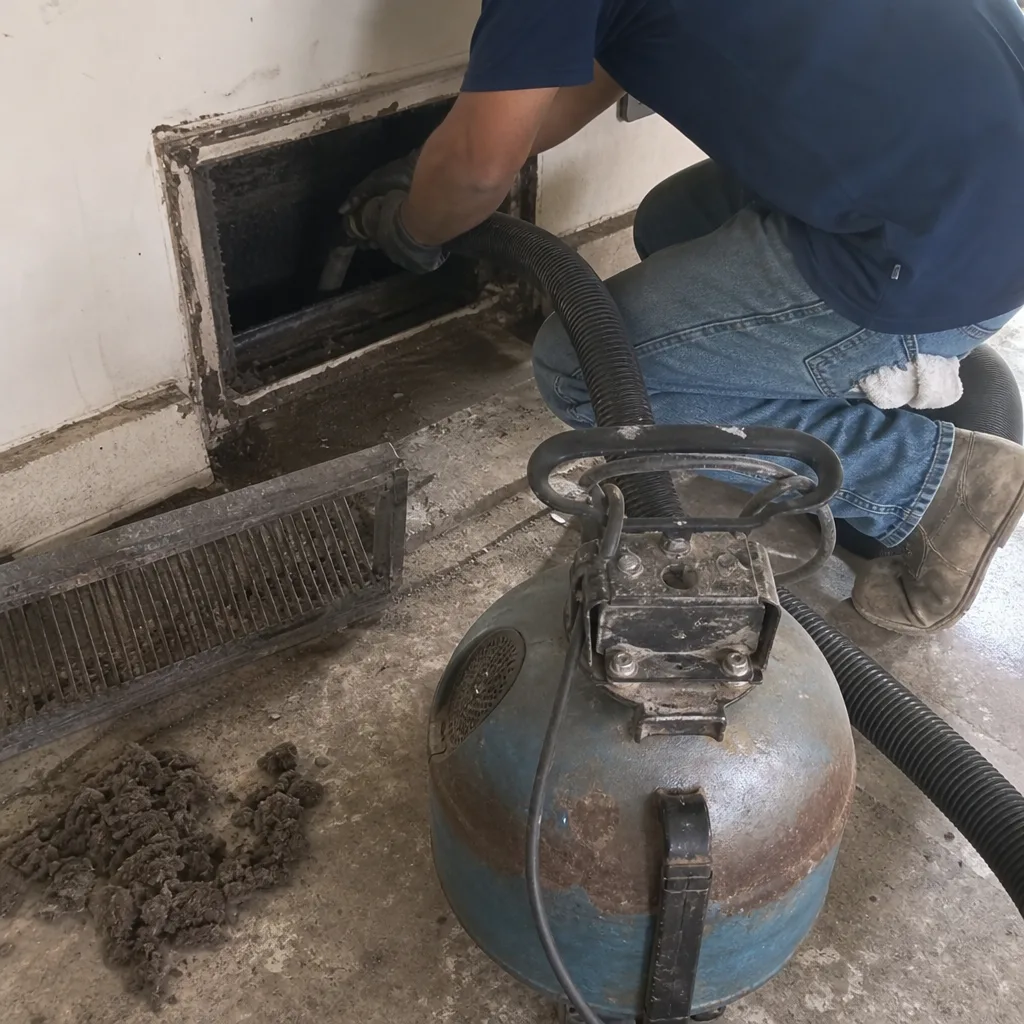 Before
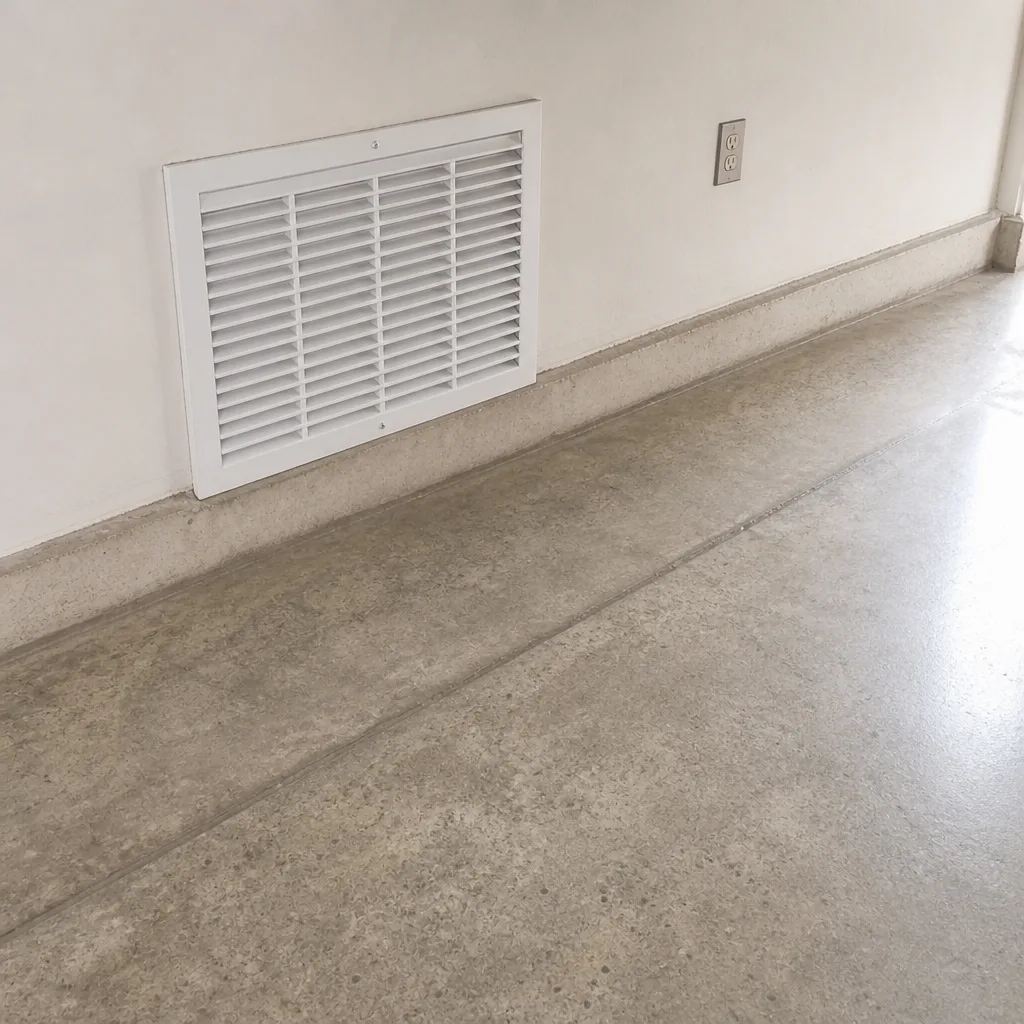 After
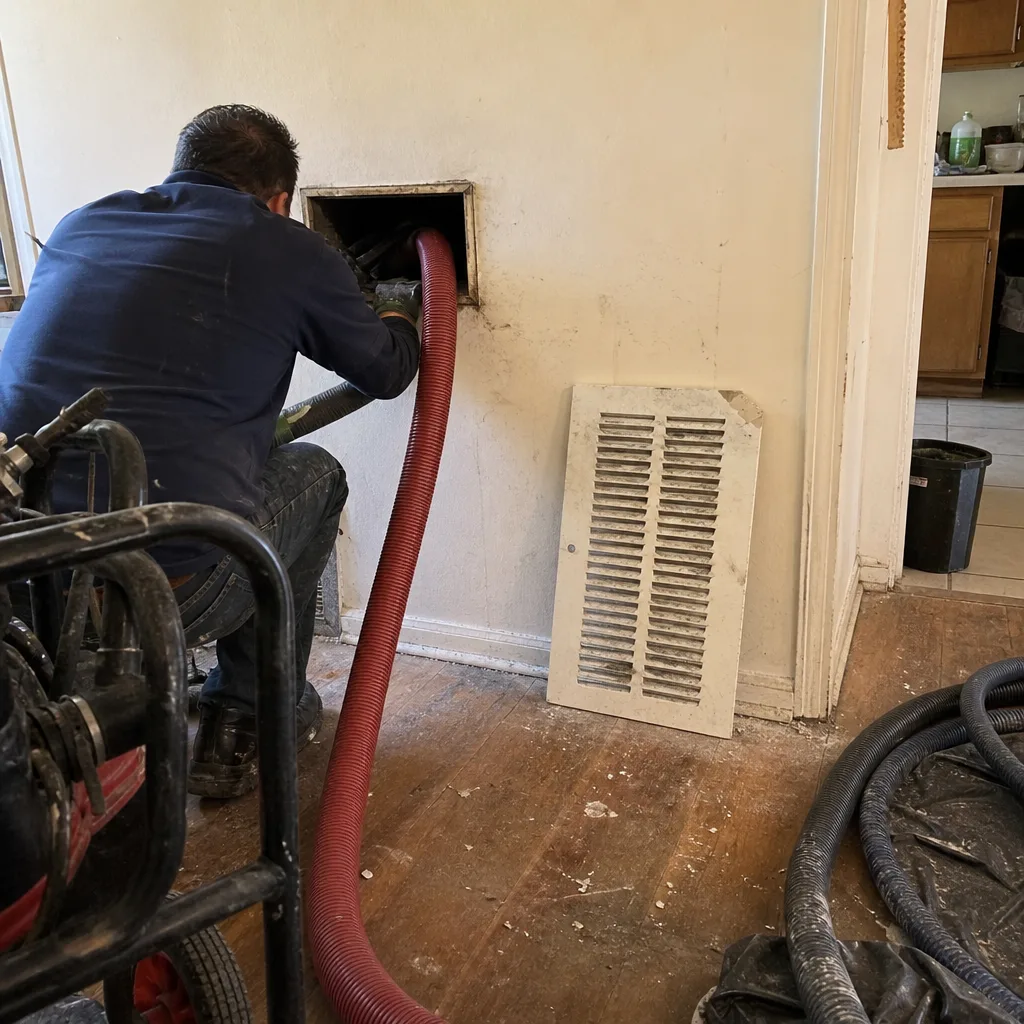 Before
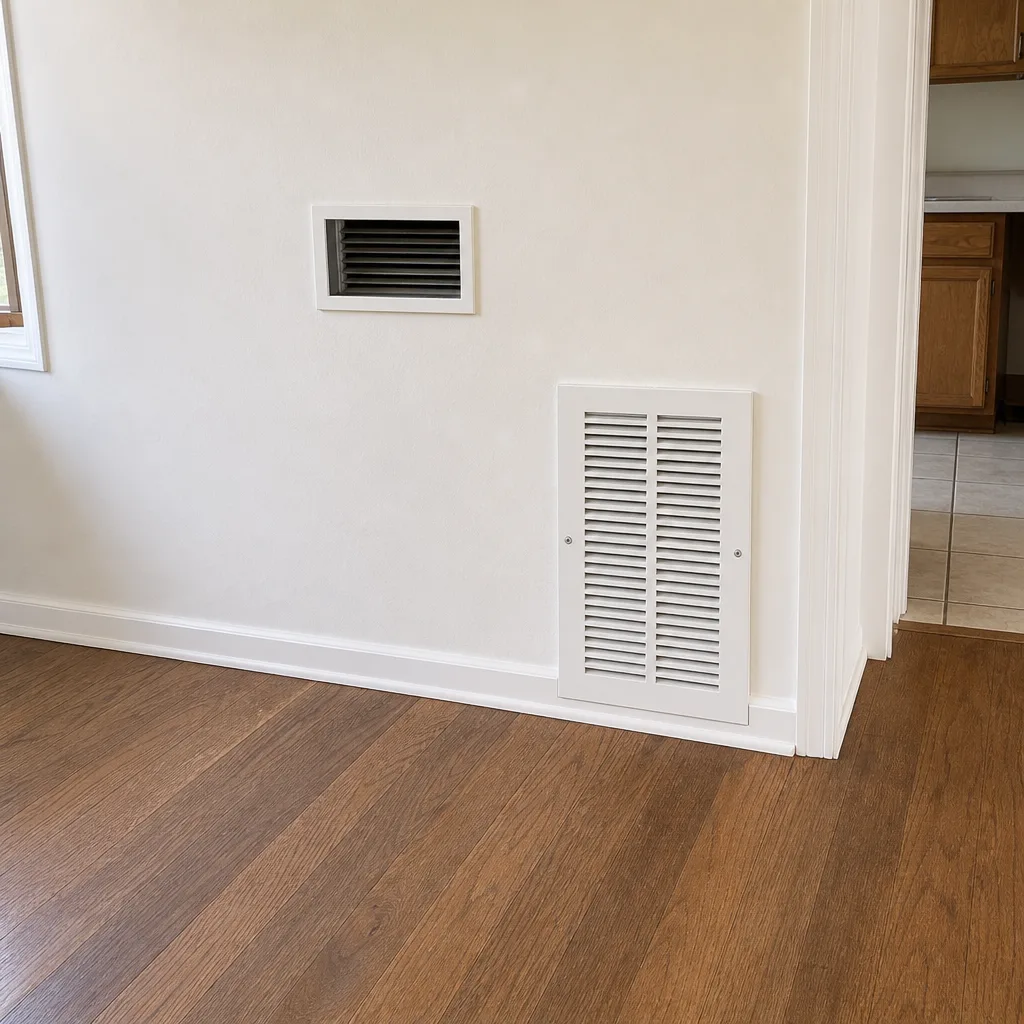 After
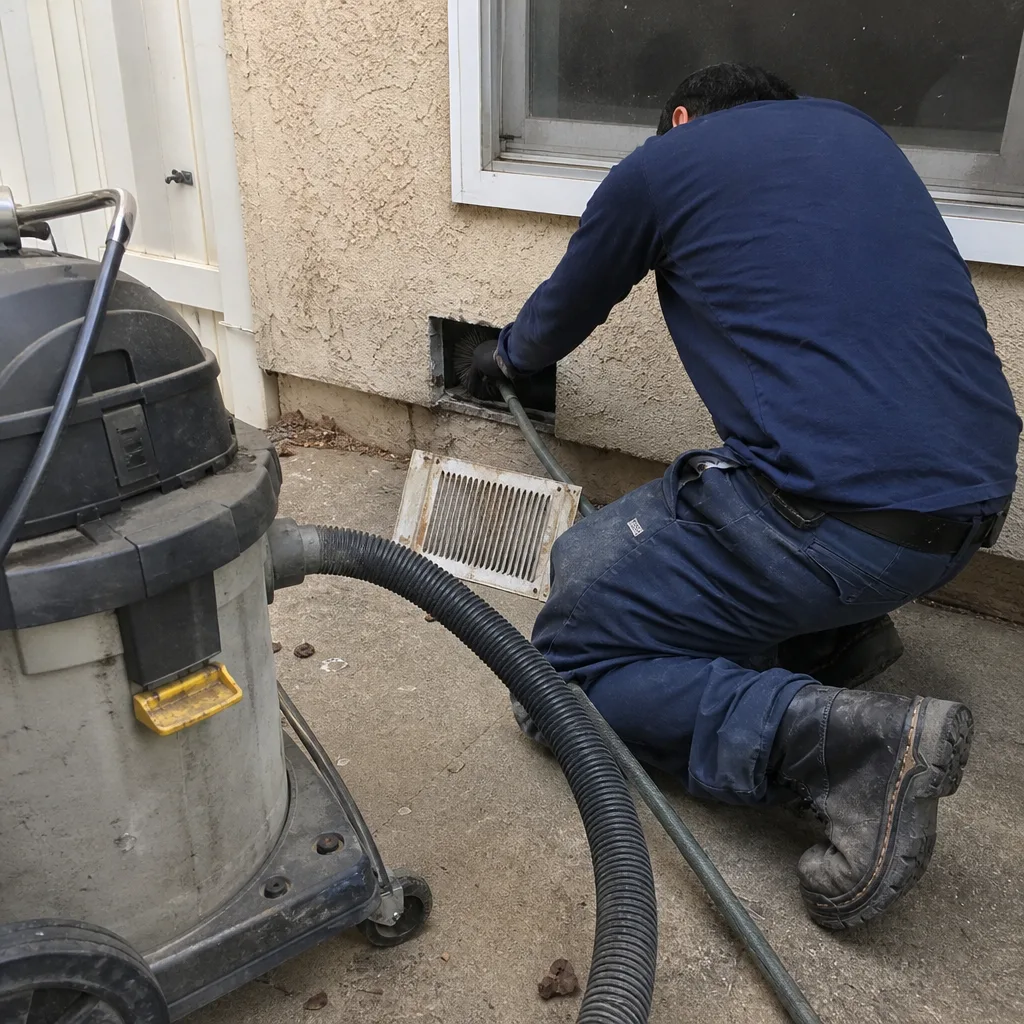 Before
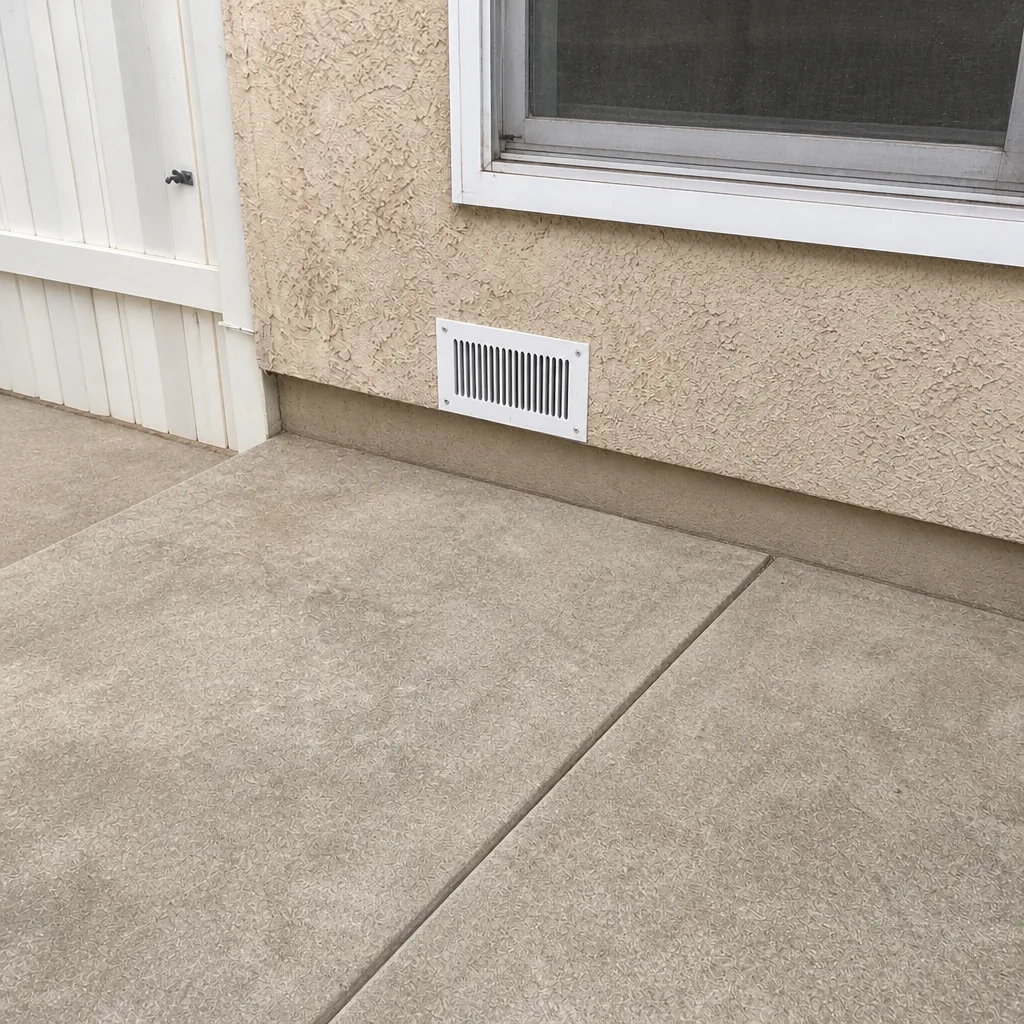 After
When to Call a Professional
Call a professional duct cleaning contractor in Garden Grove when you notice a persistent dust film settling on surfaces after cleaning, when someone in the home has allergies or asthma that seem tied to the HVAC cycle, or when the system has just come through a renovation or a move-in. Call if the ductwork is older and you don’t know its service history, if the air handler is accessible but hasn’t been serviced, or if the dryer is taking longer to dry a load of laundry. Call if the ducts were cleaned by a company you can’t verify and you want an equipment-backed second look. Garden Grove Air Duct Cleaning Pros offers free estimates in Garden Grove. Call (833) 382-8410. We answer 24/7. Fast dispatch from 7am to 7pm, Sunday through Friday. The estimate is free and the price is set per system in writing before work begins.
Frequently Asked Questions
A full-system air duct cleaning in Garden Grove is priced per system, not per vent, and the exact figure depends on the size of the home, the vent count, whether the air handler is included, and whether any duct repair or sealing is needed. The written estimate after a walkthrough sets the final price, and the estimate itself is free. Call (833) 382-8410 for an exact quote. We answer 24/7. Fast dispatch from 7am to 7pm, Sunday through Friday.
California does not require a duct cleaning license, so NADCA certification is voluntary, but it’s the closest thing to a professional standard in the trade. Verify the contractor’s NADCA status in the association’s member directory and confirm they carry liability insurance and workers’ compensation coverage before booking. A certified contractor should answer the verification questions without hesitation.
Cheap quotes usually reflect a partial scope, not a lower cost for the same job. A teaser price may cover only the supply registers or one portion of the system, and the rest of the scope shows up as an upsell once the technician arrives. Purpose-built equipment, HEPA filtration, and trained technicians cost more to operate than a shop vac, and that cost appears in the price of a complete job. For a per-system estimate in Garden Grove, call (833) 382-8410. The estimate is free.
You should receive before-and-after photos of your own ducts, a written summary of the components cleaned, and a description of any issues found. Ask for these before the crew leaves. A contractor set up to document the work will provide them without a follow-up request. If a contractor can’t produce photos of your own system, the job hasn’t been documented.
Most homes don’t need annual duct cleaning. A reasonable interval depends on the home: pets, allergy sufferers, recent renovations, and older ductwork push the interval shorter, while a newer, well-sealed system can go longer. In Garden Grove, the dry, mild climate keeps dust moving through the system through most of the year, so we suggest a walkthrough every few years rather than a fixed schedule. Call (833) 382-8410 if you’re unsure whether a clean is due.
Usually not. Dryer vent cleaning is a separate service with a separate scope and a separate risk to address. Because lint accumulation in the dryer vent is a leading household fire risk, we treat dryer vent cleaning as a dedicated safety service rather than an optional add-on. Ask specifically whether the contractor cleans the dryer vent, and whether it’s included or priced separately.
The Bottom Line
Hiring a duct cleaning contractor in Garden Grove comes down to verification, not reviews. California’s lack of a duct cleaning license means the vetting work is yours, and the things you can check are concrete: NADCA status, collection-unit CFM and HEPA filtration, contact vacuuming versus air-sweep-only, a pre-service walkthrough, a written per-system estimate, and post-job documentation with before-and-after photos. Skip the teaser price. Ask the equipment questions. Request the paperwork. A contractor set up for a real clean will answer all of it and show you what they did before they leave.
If you’d rather not run the checklist alone, Garden Grove Air Duct Cleaning Pros is set up for the full service: cleaning, repair and sealing, filtration upgrades with Honeywell and Aprilaire, and dedicated dryer vent cleaning, using Rotobrush, Nikro, and Abatement Technologies equipment. Call (833) 382-8410 for a free estimate. We answer 24/7. Fast dispatch from 7am to 7pm, Sunday through Friday. The price is set per system in writing before work starts, and you’ll get before-and-after photos of your own ducts. Our technicians have up to 14 years of experience. The local pro is licensed and insured as the state requires. The written estimate sets the final price.
Written by the team at Garden Grove Air Duct Cleaning Pros.