
Last updated November 24, 2026
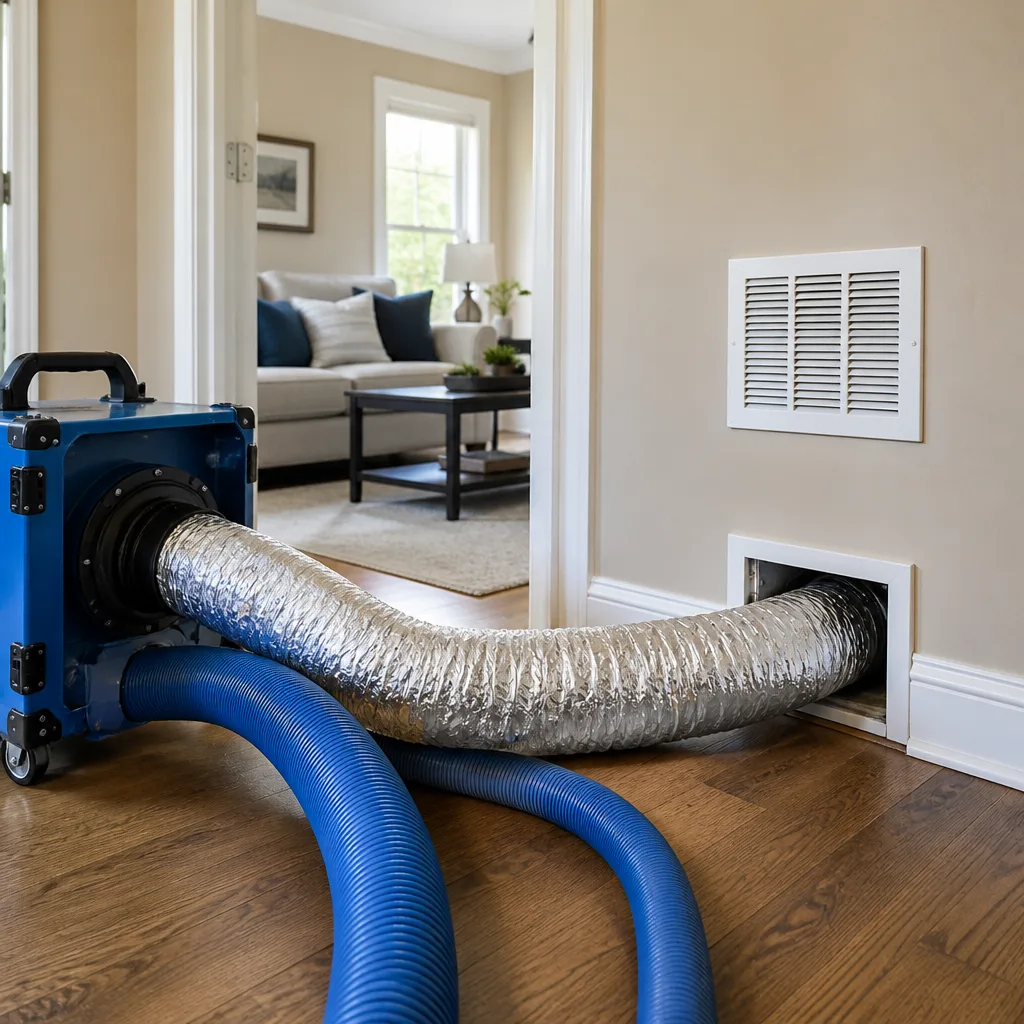 Whole-home duct cleaning
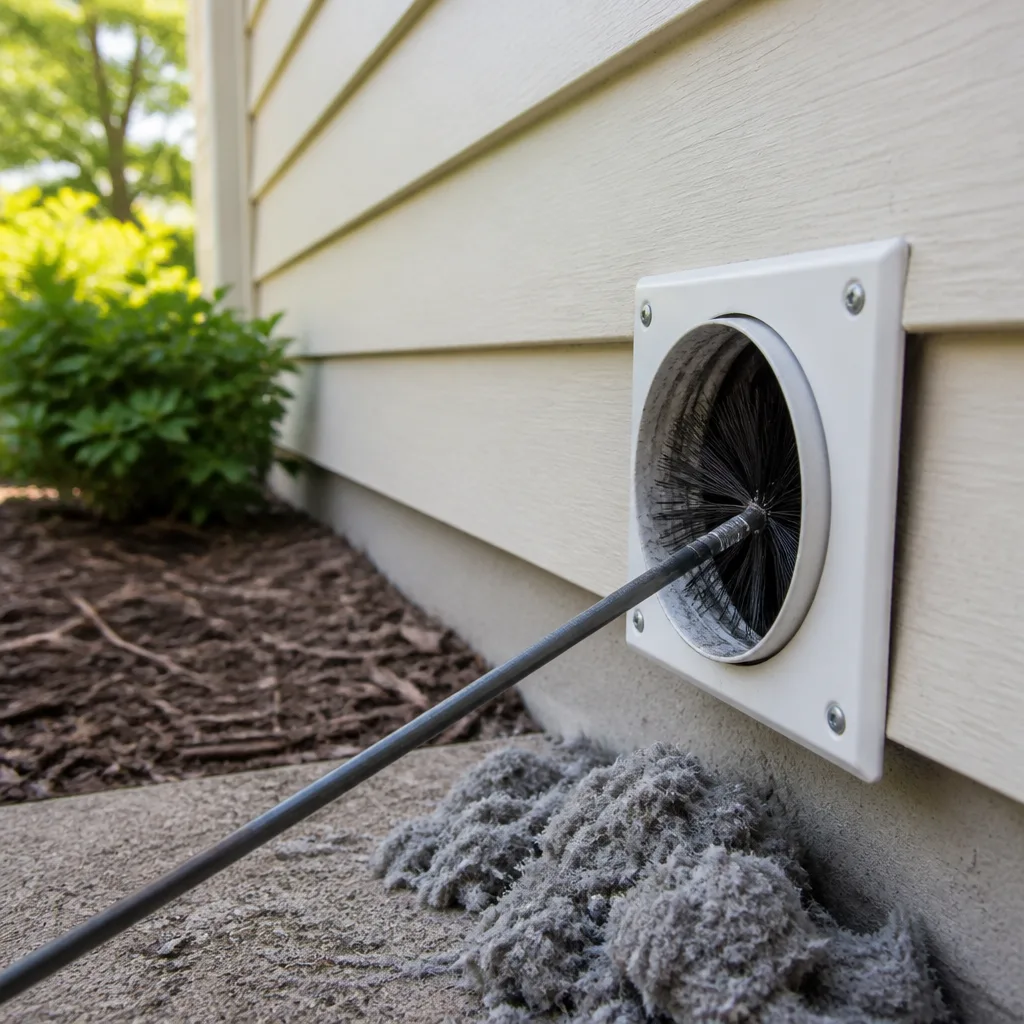 Dryer vent cleaning
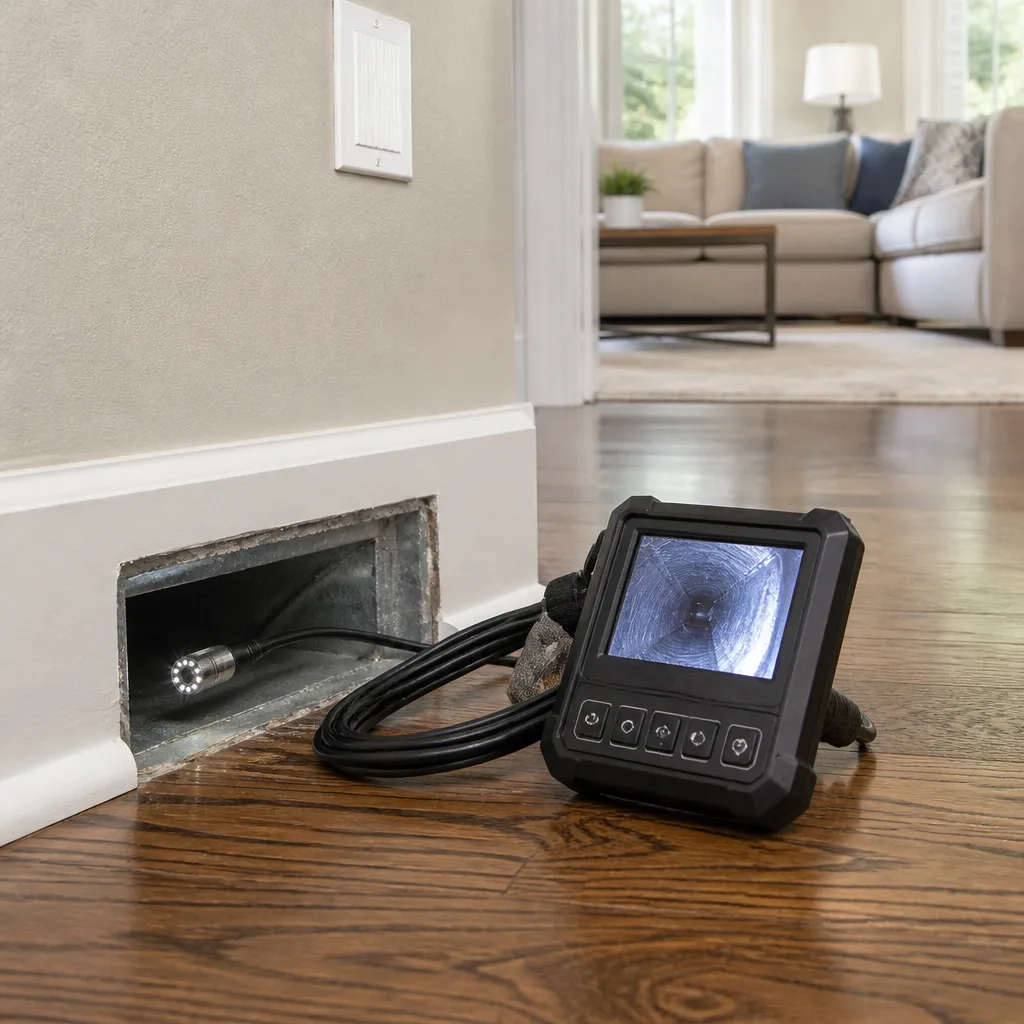 Camera inspection
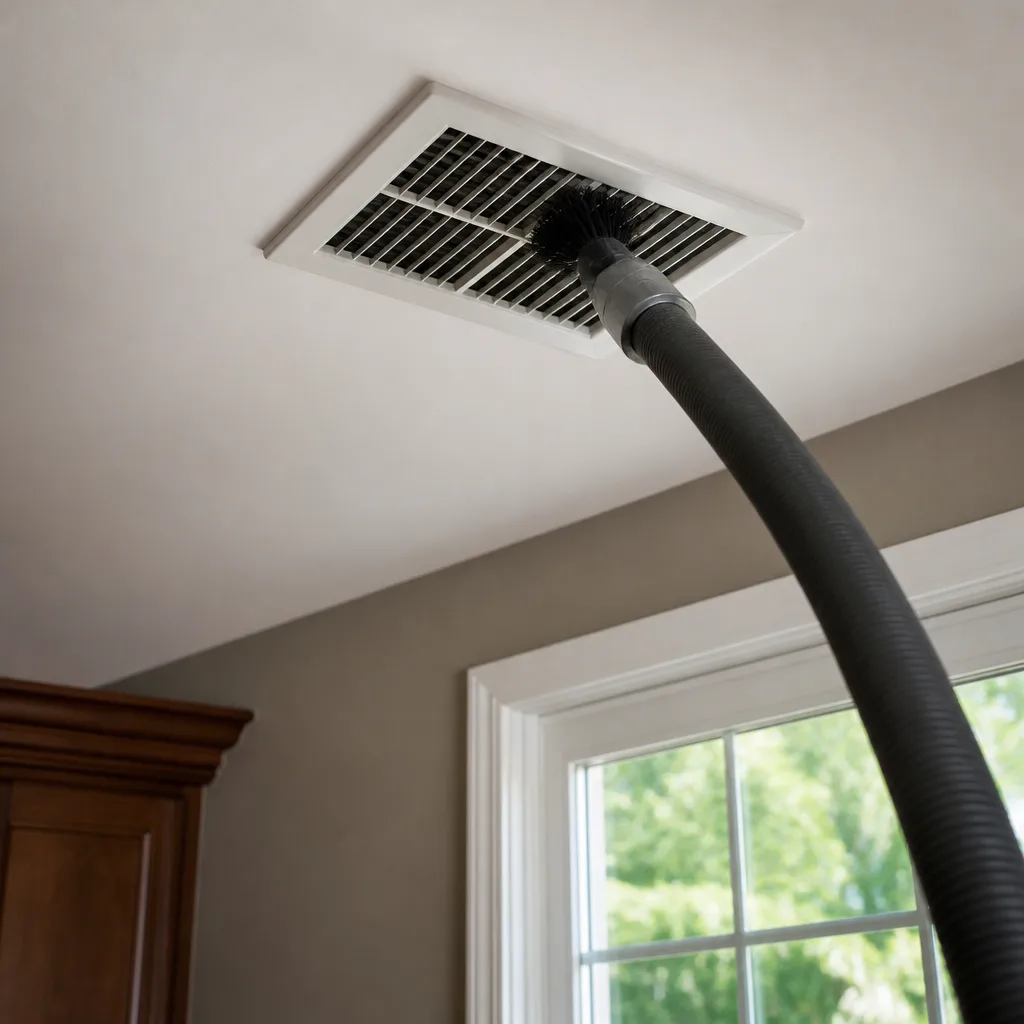 Sanitizing & deodorizing
Whole-system duct and dryer vent check with before-and-after photos - you see exactly what came out of your vents
That "$99 whole-house special" is a bait ad - the real number appears once they are in your hallway, or the "clean" is a shop-vac at the register. We photograph the inside of your ducts before and after instead.
Air Duct Cleaning Emergency Preparedness Guide for Garden Grove Homes
After wildfire smoke pushes air quality in Garden Grove into the unhealthy range for a couple of days, the contamination inside a running HVAC system doesn’t sit at the filter. It spreads across every duct surface the air touches. Most homeowners swap the filter, run the system, and figure the problem is handled. That’s the wrong call, and the indoor air quality effects can linger for months. Garden Grove has its own emergency profile: smoke events, seismic movement, and water intrusion each do something different to a duct system. This guide walks through what happens to your ducts in each scenario, what to do in the first hours, and what to document so you’re not guessing later.
Quick Answer
If your Garden Grove home has been through a wildfire smoke event, an earthquake, or water intrusion, inspect and clean the duct system rather than just replacing filters. Smoke leaves fine particulate on duct surfaces, seismic movement can open joints and disconnect flexible sections, and water intrusion starts mold colonization inside ductwork within 48 to 72 hours. Each scenario has a short protocol, and each one is easier and cheaper to handle before the contamination spreads.
Styles & brands we work with
- Whole-home duct cleaning
- Dryer vent cleaning
- Camera inspection
- Sanitizing & deodorizing
Table of Contents
- Why duct systems matter in a Garden Grove emergency
- Wildfire smoke protocol for running HVAC systems
- Earthquake preparation and what to inspect before restarting HVAC
- Post-water-intrusion duct protocol: the 48-72 hour window
- What to document for insurance after an emergency
- Maintaining air quality before professional service arrives
- Why equipment matters in post-emergency cleaning
- When to clean the ducts versus when a filter replacement is enough
Why Duct Systems Matter in a Garden Grove Emergency
The duct system is the largest surface area in your house that touches the air you breathe. A typical Garden Grove home has hundreds of feet of ductwork running through the attic, walls, and under the floor. When something invades the indoor environment, smoke, dust from seismic movement, or moisture from a leak, the ducts become the reservoir that keeps re-releasing the contamination long after the original event is over.
That’s the piece most emergency prep guides skip. They cover what to do about food, water, shelter, and documents. Fair enough. But then the event ends, the power comes back, and the HVAC system comes on for the first time, and all of the material that settled inside the ducts gets pushed back into the living space. For allergy sufferers, children, older adults, and anyone with respiratory conditions, that matters.
Garden Grove sits in a region that produces a specific mix of emergency risk: wildfire smoke that drifts in from fires burning well outside the city, moderate seismic hazard with liquefaction risk in parts of the area, and seasonal water intrusion from winter storms or plumbing failures. Each of these interacts with your duct system differently. Preparing for all three is realistic and doesn’t take much work. The good news is that a professional-grade system, the kind that uses platforms like Rotobrush or Abatement Technologies equipment, can restore a duct system to a clean baseline after almost any of these events.
If you suspect your system is already circulating contamination, the fastest path is a professional assessment. Our team at Garden Grove Air Duct Cleaning Pros handles exactly this kind of post-event work in Garden Grove, and the technicians have up to 14 years of experience reading duct systems.
Wildfire Smoke Protocol for Running HVAC Systems
When AQI in Garden Grove climbs above 150 and stays there for 48 hours or more, fine particulate settles throughout the duct system, not just on the filter. Running the HVAC during the event pushes that material through the house on a loop. Here’s the protocol that works.
During the smoke event
- Close windows and doors. Keep outdoor air out as much as possible.
- Run the HVAC on recirculate, not fresh-air mode. If your system has an economizer or fresh-air intake, shut it down for the duration.
- Use a high-MERV filter temporarily. A MERV 13 or better is the sweet spot for smoke particulate. Don’t go to a MERV 16 unless your system is rated for it, because restricted airflow can strain the blower.
- Run a portable HEPA purifier in the room where you spend the most time. This is the single most effective short-term move.
- Do not run the dryer vent or bath fans as aggressively. They pull air from inside and force replacement air in, which can pull outdoor smoke through gaps.
After the smoke event clears
- Replace the filter immediately. A filter loaded with smoke particulate is no longer doing its job.
- Inspect the return-air grilles. If they’re visibly dark or coated, that material is also in the ducts behind them.
- Schedule a duct inspection. Any smoke event that pushed AQI above 150 for 48 hours or more warrants a professional look at the duct interior, not just a filter change.
- Consider an air quality sanitizing treatment. A professional system like the ones we use can address residual odor and fine particulate that cleaning alone doesn’t fully remove.
Filter replacement alone is enough for a short, mild smoke event. It’s not enough for a multiday event that pushed AQI into the unhealthy range. The 48-hour threshold is the line between “change the filter” and “get the duct system cleaned.”
If you’re already thinking about an upgrade after this year’s smoke season, Aprilaire and Honeywell filtration systems give you a measurable improvement you can maintain going forward. We install both, and pairing new filtration with a proper air duct cleaning means the new filter is starting on a clean system instead of filtering already-contaminated air.
Earthquake Preparation and What to Inspect Before Restarting HVAC
Moderate seismic movement does things to a duct system that aren’t visible from the living room. Duct joints open. Flexible duct sections separate at the collar. Air handler mounts shift or crack. In liquefaction-risk zones within Garden Grove, ground movement can be amplified enough to do real damage to duct connections that looked fine before the event.
What to inspect before you turn the HVAC back on
- Air handler. Check the mount and the plenum for cracks, separation, or a tilted cabinet. If anything moved, stop here and get a professional assessment.
- Flexible duct connections. Look at each run where it attaches to the air handler and to the registers. A separated collar will leak conditioned air into the attic, walls, or crawl space, and it will also pull dirty air back into the system.
- Sheet metal joints. Look for gaps, popped seams, and visible separation. A duct that was sealed before the event may not be sealed after it.
- Attic straps and supports. Duct runs that dropped or are hanging loose need to be re-supported before the system runs.
- Return-air path. If the return ductwork has a break, the system will pull unconditioned air (and whatever is in the attic) directly into your living space.
Once the system checks out structurally, restart it slowly and watch for changes. A sudden increase in dust in the house, a whistling sound from a register, or reduced airflow at the far end of the run is a sign that a connection came apart or the duct system has damage that isn’t visible.
Duct repair and sealing is part of what we do, not an upsell after a cleaning. If a technician finds separated joints after a seismic event, sealing them closes the loop. Clean ducts that leak conditioned air into the attic re-accumulate debris and cost you energy every month. Sealing the duct system after cleaning is the difference between a job that holds and a job that doesn’t.
One reality check: seismic movement is unpredictable, and some damage is not visible from a homeowner inspection. If you were close to the epicenter or if the event was strong enough that you and your family noticed it, get a professional inspection before firing up the system for long runs. The HVAC cleaning service covers the air handler and coil as well as the ducts, which is what you want after a seismic event that moved anything in the mechanical closet or attic.
Post-Water-Intrusion Duct Protocol: The 48-72 Hour Window
Mold colonization inside ductwork is faster than most homeowners expect. Once moisture gets into a duct run, mold can begin colonizing porous duct surfaces, especially fiberglass-lined ductboard and flex duct, within 48 to 72 hours. That window is the entire preparedness premise for water events, and it’s the one most people miss.
Water intrusion in a Garden Grove home comes from a few places: winter storms that push water through an attic or roof failure, plumbing leaks that go undetected for days, and flood events that fill a crawl space or garage. Each of these puts moisture into the duct system through a different path. The 48-72 hour window applies to all of them.
The post-water-intrusion protocol
- Stop the HVAC. Do not run the system until you’ve had the ducts inspected. Running a system with moisture in the ducts distributes mold spores through the house.
- Document the water line and affected areas with photos before you begin any cleanup.
- Remove standing water and dry the surrounding structure using fans and dehumidification.
- Call for a duct inspection within 48 hours. This is the critical piece. A visual inspection from the registers is not enough, because the moisture gets into the duct interior.
- Plan for cleaning and sanitizing if any moisture reached the duct interior, even if you don’t see visible mold yet.
This is where equipment matters more than usual. A shop vac can’t remove mold from a duct interior, and it can’t reach the surfaces where colonization starts. Professional duct cleaning with commercial-grade equipment, like the Rotobrush and Abatement Technologies platforms we use, pulls the contamination out of the ducts rather than spreading it around. Air quality sanitizing adds a treatment step after cleaning to address residual spores and odor.
If you’re dealing with a water event right now and aren’t sure whether the ducts were affected, don’t wait for visible mold. Call and get the inspection scheduled. We answer 24/7, with fast dispatch from 7am to 7pm, Sunday through Friday.
What to Document for Insurance After an Emergency
Insurance adjusters process claims based on documentation, and duct damage after an emergency is easy to overlook if you haven’t built the paper trail. The right documentation takes ten minutes before you clean up and can mean the difference between a covered duct remediation and a denied claim.
The documentation checklist
- Photos before any cleanup. Photograph the smoke haze, the water line, the visible duct damage, the displaced air handler, anything that shows what happened and where. Date-stamp if your camera allows it.
- Air quality readings if you have them. A screenshot of the local AQI during the smoke event, or a home air quality monitor reading, is useful documentation of exposure length and intensity.
- Filter photos. Photograph a smoke-loaded or water-damaged filter before you replace it. That filter is evidence of what was in the system.
- Contractor reports. If a professional inspects the ducts, ask for a written report. A report from a qualified contractor carries weight with adjusters in a way that homeowner photos don’t.
- Receipts and records. Keep the receipts for filters, fans, dehumidifiers, and any remediation supplies.
- A timeline. Note the date of the event, the date you discovered the duct impact, the date you called a professional, and the date work was done.
Two categories of emergency produce duct claims more often than others. Wildfire smoke events are often covered under homeowners’ policies as a smoke damage claim if you can document the impact. Water intrusion that reached the duct system is covered when it wasn’t the result of deferred maintenance. Both categories benefit from a contractor report from a company that shows the work. We provide written documentation of what we find and what we do, which is exactly what adjusters want to see.
One note: don’t wait for the claim to process before getting the ducts inspected. Waiting extends the mold window, and the longer the contamination sits, the more work remediation takes.
Maintaining Air Quality Before Professional Service Arrives
Between the emergency and the arrival of a professional, your job is to limit further contamination. A few decisions make a meaningful difference.
- Run the HVAC less, not more. If contamination is likely, the system is a distribution mechanism. Short, occasional runs to keep air circulating are fine. Long runs push duct contamination into the living space.
- Use portable HEPA purifiers in the primary living spaces. One in the bedroom and one in the main living area covers most households. This is the highest-yield interim move.
- Seal return-air grilles with a temporary filter material. Filtering return air reduces the amount of contamination being drawn back into the system. Change the temporary filter every few days.
- Keep the windows and doors closed during a smoke event. After a water event, ventilate to dry the structure, then close up once the surfaces are dry.
- Do not run the AC fan continuously. Constant fan mode distributes more material through the system than auto mode does.
- Keep interior doors open so return-air paths work evenly through the house.
Guardsman filters are a reasonable interim choice if you need to keep a filter in place through a longer recovery period: they’re better than the cheapest option and won’t restrict airflow. If you’re replacing filters on a loop during a smoke event, buy a few and change them aggressively until the air clears.
What you don’t want to do during the interim is run a shop vac through the ducts yourself. Consumer vacuums don’t have the suction or containment to remove duct contamination, and in practice they stir it up and redistribute it. Wait for the professional platform.
Why Equipment Matters in Post-Emergency Cleaning
Post-emergency duct cleaning is a different job than routine cleaning. Smoke particles are smaller than standard dust. Mold spores are microscopic and cling to duct surfaces. Seismic events can mix construction debris (attic insulation, drywall dust, fiberglass particles) into a duct system that was previously clean. The equipment needs to handle all of that, and consumer tools can’t.
Professional duct cleaning platforms like Rotobrush and Nikro use negative air pressure combined with rotary agitation and HEPA containment. The negative pressure seals the duct system and pulls loosened contamination into a HEPA-filtered collection unit rather than releasing it into the house. That’s the difference between cleaning and blowing dust around. Abatement Technologies equipment adds a level of containment and HEPA filtration that’s used in commercial and industrial air quality work, which is what post-emergency remediation needs.
For the homeowner, the practical answer is simpler: use a duct cleaning service that uses purpose-built equipment, not a shop vac. Ask what equipment the technician is using before booking, and if the answer is anything other than a known professional platform, walk away. For a full explanation of the process, see our air duct cleaning service.
One more piece worth knowing about: the dryer vent cleaning service is often scheduled alongside duct work after an emergency, because the dryer vent is the other duct system in most homes and it carries its own fire risk if it’s loaded with the fiber and dust a post-event house produces.
When to Clean the Ducts Versus When a Filter Replacement Is Enough
Not every event requires a professional cleaning. Here’s how to draw the line.
- Filter replacement alone is enough for a short smoke event (under 24 hours of unhealthy air quality), a minor seismic event with no visible damage, or a plumbing leak that never reached the duct runs. Change the filter, watch the system for a week, and you’re done.
- Professional inspection and cleaning are warranted for a smoke event pushing AQI above 150 for 48 hours or more, any seismic event with visible duct damage or displacement, any water intrusion that reached the duct interior, and any sudden increase in household dust, odor, or allergy symptoms after an event.
- Full remediation with sanitizing is warranted for visible mold in the ducts, persistent odor from the registers after cleaning, or a water event that extended past 72 hours before drying began.
When in doubt, pay for the inspection. A free estimate tells you what you’re dealing with. The written estimate is what sets the final price, and there’s no charge to know whether the ducts need work or not.
Common Mistakes to Avoid
- Replacing the filter and assuming you’re done. After a multiday Garden Grove smoke event, filters catch the material that reaches them but the ducts retain the rest. The filter change is the start of the cleanup, not the finish.
- Running the HVAC during a smoke event because “the filter will catch it.” A filter catches what passes through it, but fine smoke particulate coats every duct surface it touches on the way. Filtering and distributing are the same action in this scenario.
- Waiting to inspect ducts after a water event. The 48-72 hour mold window doesn’t wait for insurance adjusters or busy schedules. If water reached the ducts, the clock started when the water did.
- Restarting the HVAC after an earthquake without an inspection. A disconnected flex duct in the attic or a shifted air handler will pull dirty air into the house every time the system runs. Fifteen minutes of inspection prevents weeks of contamination.
- Hiring a duct cleaning company that uses a shop vac. Consumer equipment can’t contain the material it loosens. Post-emergency cleaning needs a professional platform like Rotobrush or Nikro, not a truck-mounted shop vac with a long hose.
- Cleaning the ducts without sealing the duct system. Clean ducts that leak the same way they did before the event re-accumulate debris. Repair and sealing are part of the job when a technician finds gaps, which is common after seismic movement.
- Skipping documentation. Photos, filter photos, air quality readings, and a contractor report take minutes to collect and are the difference between a covered claim and a denial.
See the difference
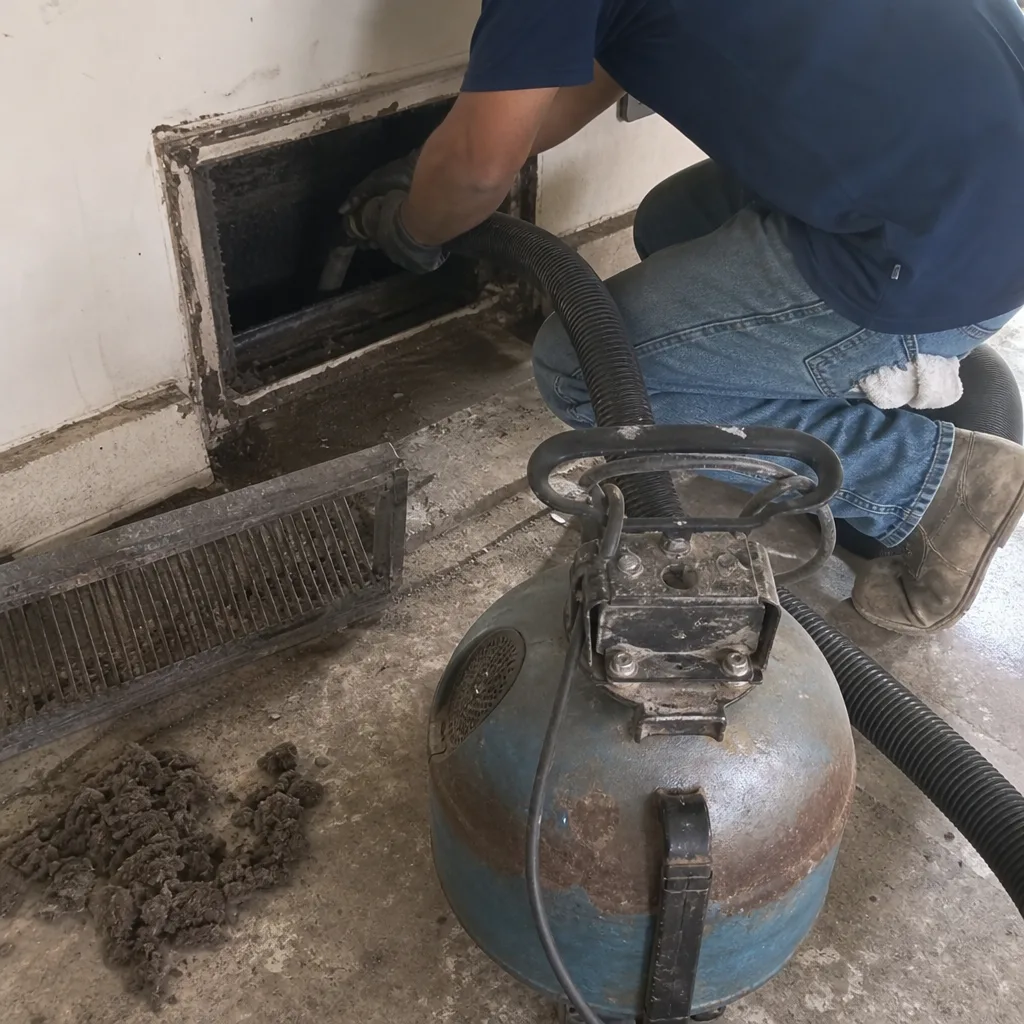 Before
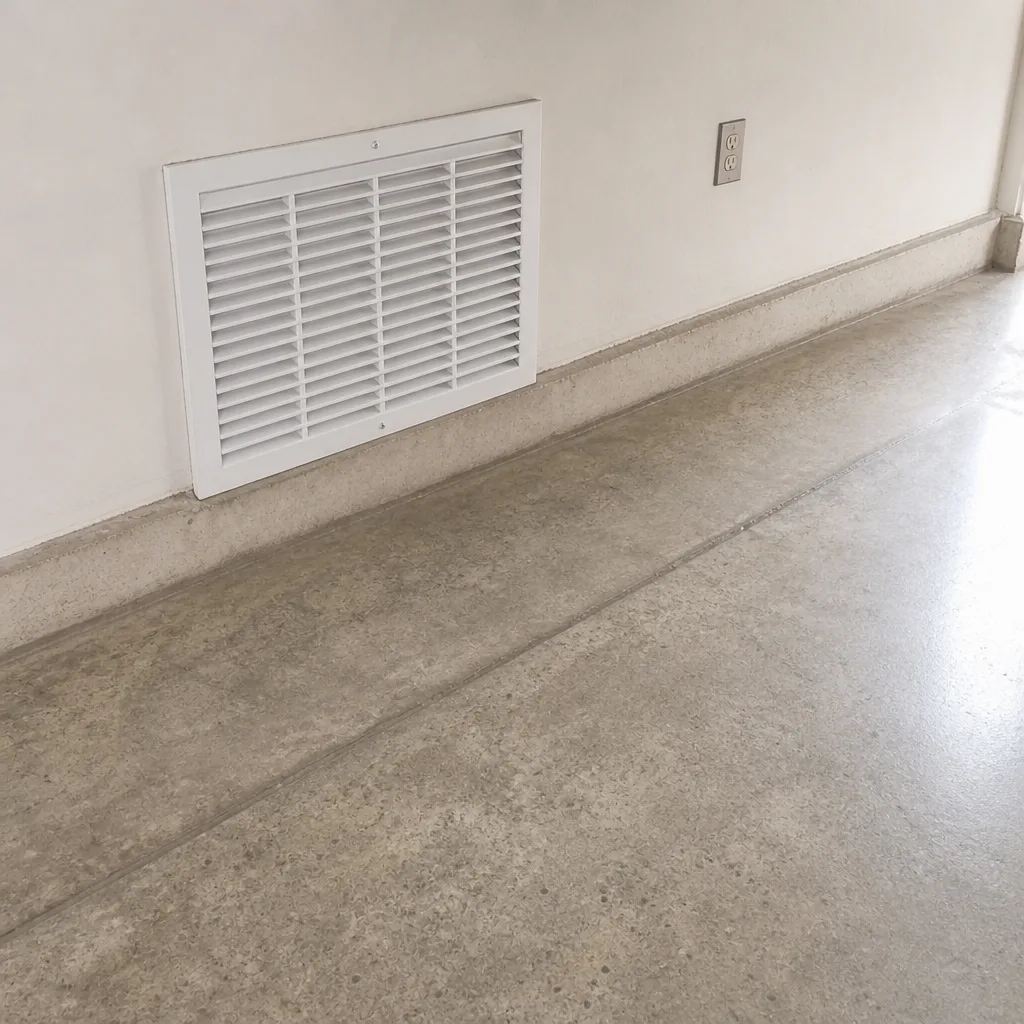 After
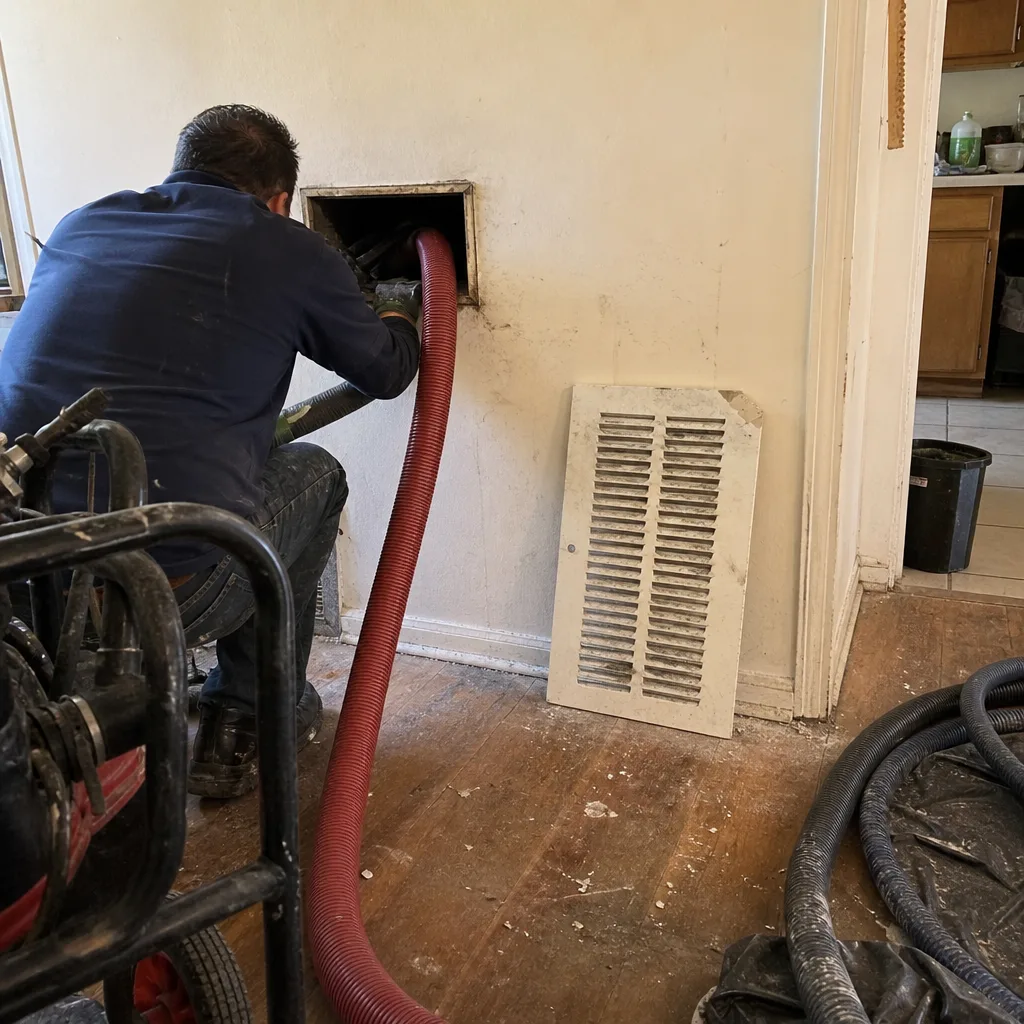 Before
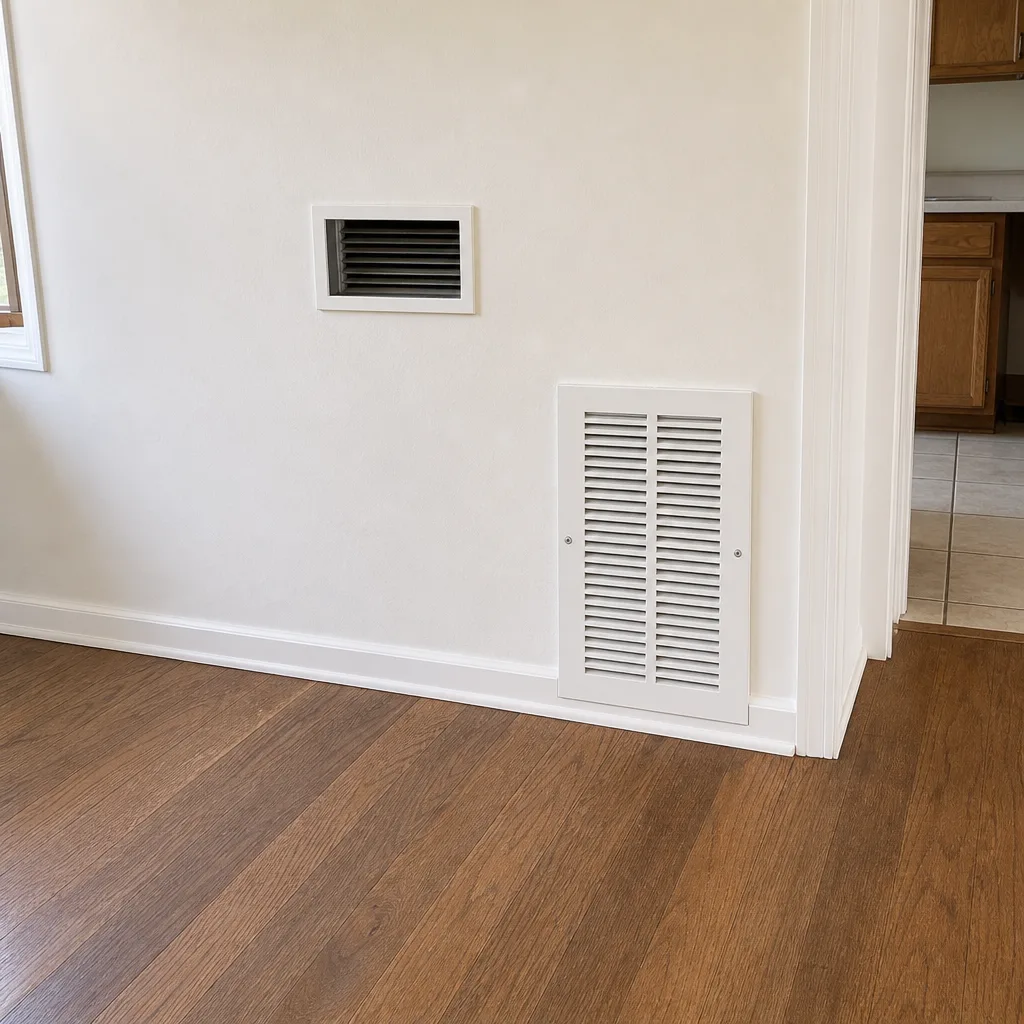 After
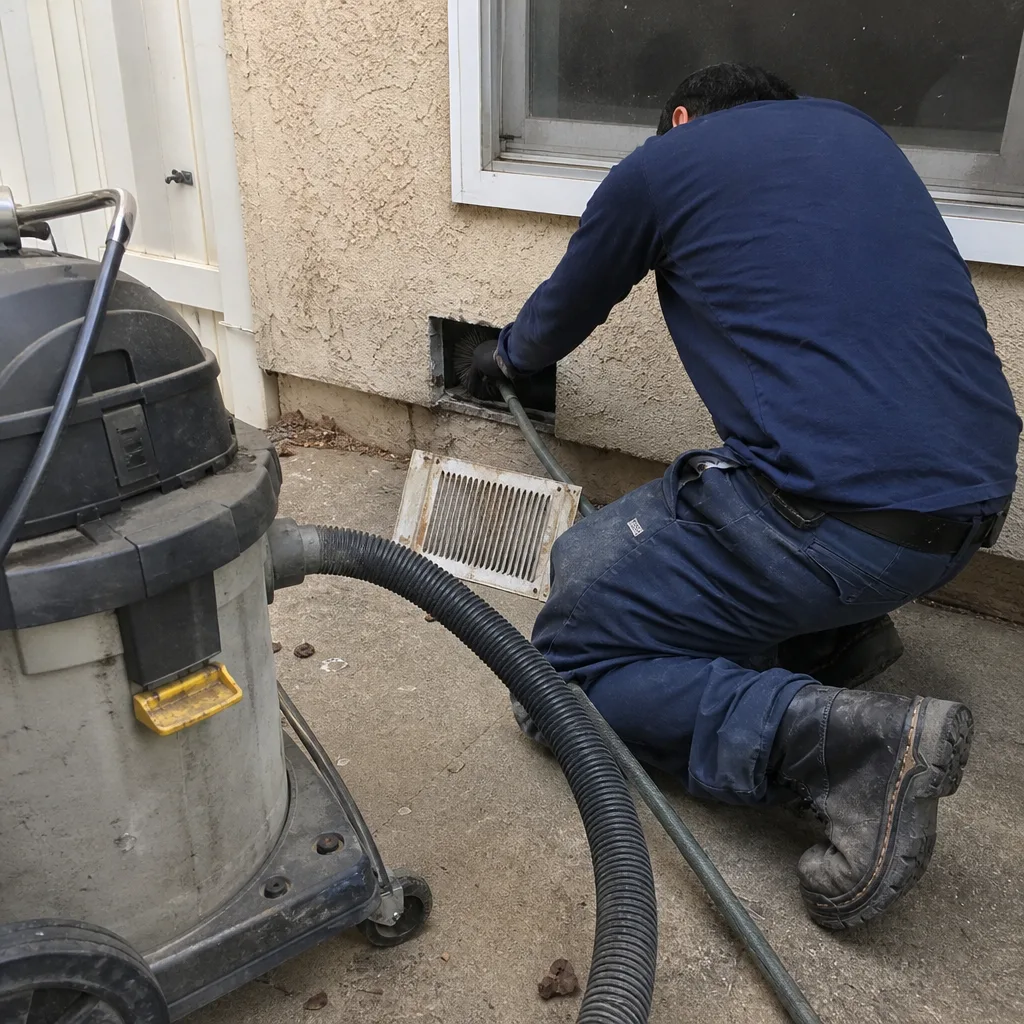 Before
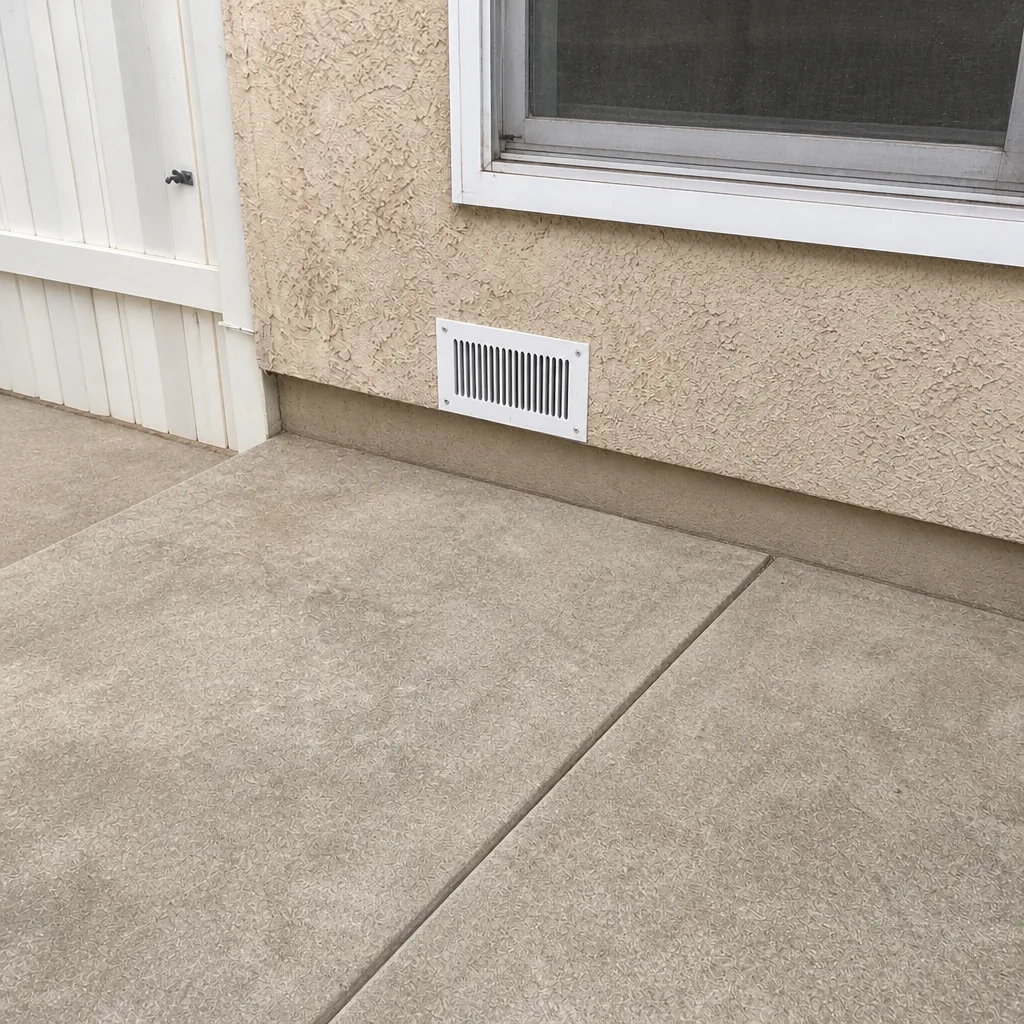 After
When to Call a Professional
Call for a professional assessment if any of the following apply. Your Garden Grove home had more than 48 hours of air quality in the unhealthy range during a smoke event. You felt a distinct earthquake and haven’t inspected the duct joints and air handler mount. Any water intrusion reached the duct system, whether visible or suspected. There’s a persistent smell from the registers after a cleaning, or a sudden increase in household dust and allergy symptoms. Mold is visible on registers, grilles, or any duct surface. The HVAC system sounds different after an event. When in doubt, don’t guess. Garden Grove Air Duct Cleaning Pros offers free estimates in Garden Grove, and we can tell you what we’re seeing and what needs to be done. Call (833) 382-8410. We answer 24/7. Fast dispatch from 7am to 7pm, Sunday through Friday.
Frequently Asked Questions
Schedule a duct inspection within a week or two after the smoke clears, and don’t run the HVAC continuously in the meantime. Any event that pushed local AQI above 150 for 48 hours or more leaves fine particulate on duct surfaces that filters won’t remove. Cleaning sooner limits how deeply that material settles and how long it recirculates. Call (833) 382-8410 for a free estimate.
It can, especially in liquefaction-risk zones and older homes. Moderate seismic movement opens duct joints, disconnects flexible sections, and shifts air handler mounts. Some of that damage isn’t visible without a professional inspection. If you felt the quake significantly, have the duct system and air handler checked before running the system for long periods.
48 to 72 hours. That’s the window for mold to start colonizing moisture-exposed duct surfaces, especially porous ductboard and flex duct interiors. After the window closes, the mold may already be established and the cleaning scope grows. If water reached the ducts, stop the HVAC and call for inspection immediately.
Often yes, when the cause is a covered event like smoke damage or sudden water intrusion, and when you can document the impact. Photos, filter evidence, air quality readings, and a contractor report are what adjusters want. We provide written documentation of what we find and what we do, which supports the claim. Your policy and your adjuster make the final call.
Both, if the smoke event was multiday. Replace the filter immediately to restore filtration for the next event, and get the duct system cleaned if the smoke exposure was significant. Clean ducts plus a fresh filter is the complete answer. Filter replacement alone leaves contamination in the ducts.
You can handle the surface cleanup, filters, and register grilles, but professional-grade duct cleaning needs equipment that homeowners don’t have. Consumer vacuums lack the suction, agitation, and HEPA containment to remove post-emergency contamination without spreading more of it through the house. If the ducts need cleaning, use a professional platform like Rotobrush, Nikro, or Abatement Technologies equipment.
The Bottom Line
Emergency preparedness for a Garden Grove home has to include the duct system, because the ducts are where contamination lives after the event ends. Wildfire smoke leaves fine particulate distributed throughout the ducts. Seismic movement opens joints and disconnects air handlers. Water intrusion starts a mold clock that reaches 48 to 72 hours faster than most homeowners realize. In each case, the response is the same: inspect the ducts, clean them with professional equipment if contamination is confirmed, repair and seal any gaps the inspection finds, document everything, and consider adding better filtration so the next event is easier to handle. Our team handles all of these cases for Garden Grove homes. Call (833) 382-8410 for a free estimate. We answer 24/7. Fast dispatch from 7am to 7pm, Sunday through Friday.
Written by the team at Garden Grove Air Duct Cleaning Pros.